インテリジェントスコアリングを始めよう
このページの内容
インテリジェントスコアリングについて
インテリジェントスコアリングは、XM Discoverとのやり取りを分類と柔軟なルールベースのスコアリングで評価します。インテリジェントスコアリングは、主観的なやり取りを定量的な尺度でスコアリングすることで、複雑な作業を簡素化し、従業員が最も重要なインサイトに労力を集中できるようにします。
インテリジェント・スコアリングは次のような場合に役立つ:
- 顧客対応エージェントの品質管理を行い、プロフェッショナリズム、共感、知識といったソフトスキルのアセスメントやコーチングを支援する。 Qtip:インテリジェントスコアリングは、CSATやNPSのような顧客から与えられたスコアがもたらすバイアスを取り除くのにも役立ちます。例えば、ある顧客が返品や製品の問題で動揺し、純粋なフラストレーションからエージェントを否定的に評価することがある。対比として、インテリジェントスコアリングは、エージェントのソフトスキルのパフォーマンスのみを考慮して評価を下す。

- ソーシャルメディア上の時事イベントに対する世間の反応をタイミングよく追跡することで、貴社は不確実な時代において、顧客にどのように対応するのが最善かを判断し、根拠に基づいた意思決定を行うことができます。
- 法的リスクの判断
- 販売効果の判定。
- さらにカスタマーエクスペリエンスのユースケースも!
インテリジェントスコアリングの設定
インテリジェントスコアリングを設定するには、DesignerとStudioの両方でいくつかのステップを完了する必要があります。
Qtip:XM Discoverに取り込まれたポイントフォワード・データをスコアリングしたい場合は、Incremental Data Loadsに含めるを選択してください。
インテリジェントスコアリングへのナビゲート
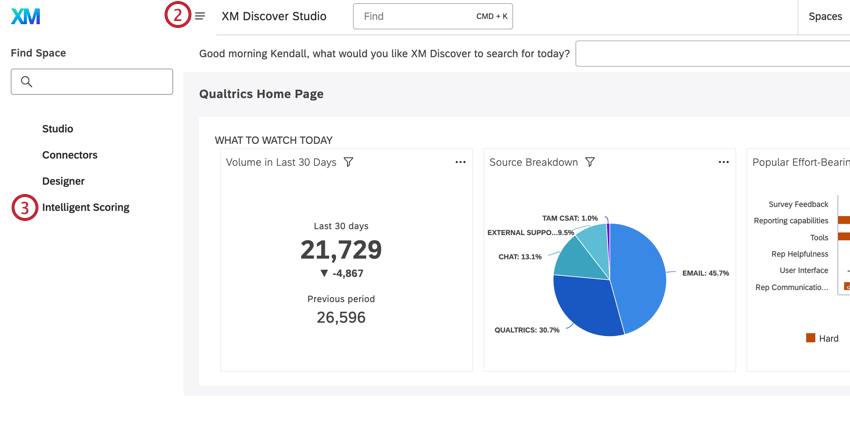
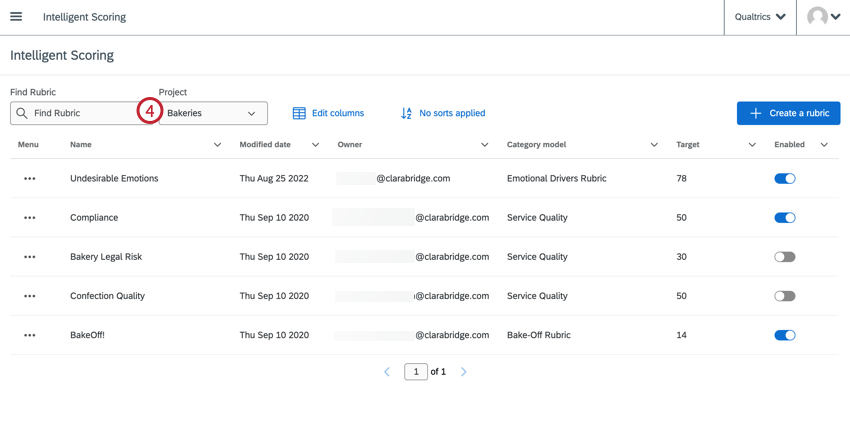
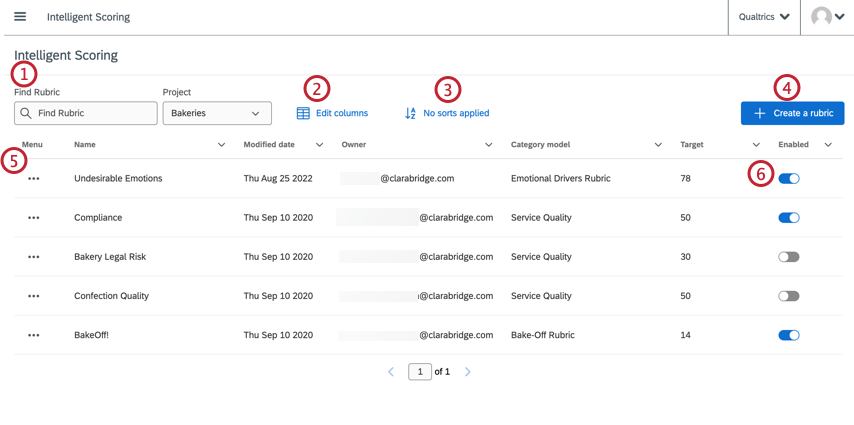
選択したプロジェクトのインテリジェント・スコアリング・ルーブリックのリストが表に表示されます。このテーブルから、ルーブリックの作成、編集、およびマネージャーを行うことができます。

FAQs
What is a category model? What is a topic?
What is a category model? What is a topic?
Since category models are how XM Discover analyzes topics, you will see “category model” and “topic” used interchangeably throughout the platform.
What is the difference between a rubric and a scorecard?
What is the difference between a rubric and a scorecard?
One way of thinking about it is that a rubric is the input, and a scorecard is the output.
Can I create more than one rubric?
Can I create more than one rubric?
Being able to use multiple models to define rubrics is particularly important because the root node rule of a given model is the first form of conditional logic. If a document does not meet the root node rule, it will not be scored. This is so it will not generate false positives for alerting and case creation.
Are there any recommendations around assigning weights?
Are there any recommendations around assigning weights?
Here’s how you can use drivers for quality assessment:
- Use the scoring model as an input for drivers and set the outcome to be a high CSAT score or customer experience score.
- See which topics and behaviors have the highest impact.
- When creating a rubric, select the driver from the Suggest Ranks drop-down to display topics' impact rank next to their weights.
- Assign larger weights to topics that are more likely to drive to or away from a desired outcome. Another approach is to start with equal weighting, then adjust it based on your needs.
If the rules used in a rubric are present multiple times in a document, will that result in multiple scores?
If the rules used in a rubric are present multiple times in a document, will that result in multiple scores?
What's the behavior of the intelligent score attribute during the rescoring process? Does it show as "null" for all documents, or does the old score stay until the new score replaces it?
What's the behavior of the intelligent score attribute during the rescoring process? Does it show as "null" for all documents, or does the old score stay until the new score replaces it?
An exception to that would be if there was some update to the scoring logic that excluded some documents that previously had scores. In this scenario, those documents would be updated to "null."
If I classify a rubric model, does that have the same effect as rescoring a rubric? How does it impact historical document scoring?
If I classify a rubric model, does that have the same effect as rescoring a rubric? How does it impact historical document scoring?
素晴らしい! フィードバックありがとうございます!
フィードバックありがとうございます!