

What is compliance in contact centers?
When they talk about compliance, contact center managers are specifically referring to adhering to rules created by a regulatory body or by the business they work for.
Depending on the country, the sector or the business, the rules that contact centers have to follow can vary. But compliance can also mean complying to the behaviors that your organization wants to see – like showing friendliness, understanding, and recapping the problem.
Compliance versus performance
Compliance has a different meaning in different settings – so it’s important to understand context. In regulated industries like banking, for example, compliance usually means adhering to rules set out by regulators and local legislation. Not divulging protected customer information is an important necessity for regulatory compliance, for example. Legislation like GDPR, which we’ll touch on in the next section, is another good example of this.
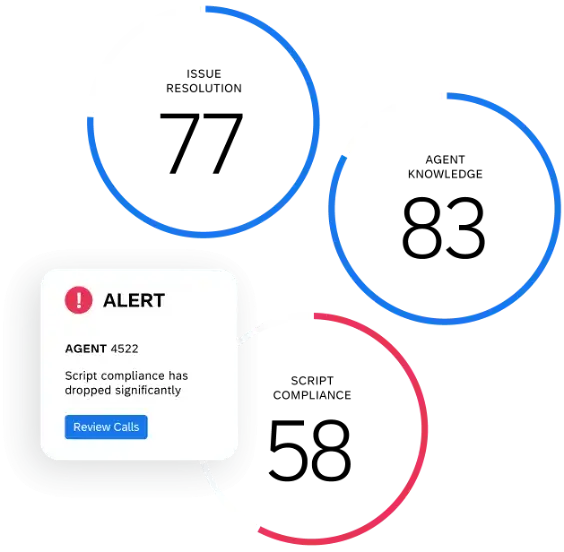
In other industries, though, the word ‘compliance’ is often used in a performance context. For instance, if a contact center agent sticks to required scripts and processes, then they’d score highly in script compliance.
Compliance in that case is usually graded along a spectrum from ‘poor’ to ‘excellent’, whereas compliance in a regulated environment is a much simpler ‘yes or no’ situation – with legal ramifications for failing to hit the mark.
Industry standards and compliance regulations for contact centers
Though industry standards for contact center compliance can differ between sectors and location, there are a range of well-known rules and regulations shaping today’s contact center practices.
Here’s a quick overview:
Data privacy and protection compliance laws
Depending on where a contact center operates, it’ll be subject to a range of privacy and security compliance regulations aimed at helping keep customers safe and secure.
General Data Protection Regulation (GDPR)
GDPR applies globally to any contact center handling data for EU citizens. Its core tenets are around consent, the right to be forgotten, data minimization, and data breach notification.
California Consumer Privacy Act (CCPA)
This regulation is similar in nature to GDPR, but applies only in California. It allows consumers to request data access, deletion, and to opt-out of data selling.
Health Insurance Portability and Accountability Act (HIPAA)
Required for contact centers dealing with healthcare data in the US. It focuses on safeguarding Protected Health Information (PHI) to ensure patient privacy.
Payment Card Industry Data Security Standard (PCI DSS)
Payment Card Industry Data Security Standard (PCI DSS) compliance is designed to prevent contact centers from keeping records of sensitive cardholder data, such as CVV2 numbers, PINs or entire magnetic stripe data.
Telephone Consumer Protection Act (TCPA)
This act specifically regulates telemarketing calls, auto-dialing, and SMS. It requires consent and opt-out mechanisms, and prevents contact centers from reaching out at unsociable hours – or from calling customers who’ve specified they do not want to be reached.
Do Not Call (DNC) registries
Contact centers must comply with national and regional Do Not Call lists. That includes the FTC in the US, TPS in the UK, and DNCR in Australia.
ISO standards
Developed by the International Organization for Standardization (ISO), an ISO certification is not usually a legal necessity, but attaining one does require being able to reliably hit specific quality threshold as outlined by the organization’s frameworks and processes.
ISO 18295-1:2017
This ISO dictates overall best practices for contact centers, specifying “a framework for any CCC that aims to assist in providing clients and customers with services that continuously and proactively meet or exceed their needs.”
https://www.iso.org/standard/64739.html
ISO 9001:2015
Widely used for quality assurance in processes – including contact centers.
https://www.iso.org/standard/62085.html
ISO/IEC 27001
ISO 27001 ensures secure handling of sensitive customer data and helps mitigate cyber threats.
https://www.iso.org/standard/27001
ISO/IEC 27701
This ISO focuses specifically on handling personally identifiable information, emphasizing the need for safeguards.
https://www.iso.org/standard/27701
Operational and industry-specific compliance standards
These compliance standards, like ISOs, are designed to be ‘best practice’ guidelines for processes in their specific sectors. So, while not a legal mandate, they show excellence in quality and adherence to guidelines.
COPC CX standard
Originally developed by Microsoft and others for contact centers, this standard focuses on performance management, quality, and process optimization.
SOC 2 compliance (System and Organization Controls)
This is particularly important for outsourced or SaaS-based contact center platforms. It emphasizes data security, availability, processing integrity, confidentiality, and privacy.
Gaining consent for call recording
Frequently, customers phoning a contact center will be greeted with a recorded message, stating that “calls will be recorded for training purposes”. This message ensures that anyone contacting the contact center knows that they are being recorded and – by staying on the line – they are effectively giving consent for businesses to do so. Agents may also state that calls are recorded once a connection is made.
Why contact center compliance is important
Contact center compliance requirements are there for a reason, usually to protect customer data but also to help businesses from alienating their customer base. The need to protect customer data should be self-evident, but in practice, contact centers can struggle to ensure that their teams are following the right frameworks – making monitoring data security a cumbersome task.
Key reasons to focus on contact center compliance include:
- Potential fines or penalties
Without ensuring that you meet legal compliance requirements, your business may end up paying severe fines or penalties. - Reputational damage
Your customers rely on you to protect their interests, and trusting your brand with sensitive information means that your reputation is at stake if that trust is broken. Without a robust contact center security policy, for example, you risk data breaches that would cause customers to be very unhappy with your business. - Lost business and revenue
When customer trust is broken – particularly at scale – this can result in harsh ramifications for your business. If current customer trust is betrayed, for example, businesses will struggle to attract new ones as well. Listening to every call, fixing broken experiences and implementing training to ensure agents are exhibiting the behaviors that create loyalty are all great ways to build long lasting relationships. - Staff turnover
If a business doesn’t follow compliance and regulation, there’s a risk that employees will leave in search of a more reputable company. Being asked to risk their own careers and reputations for a compliance failure could cause high employee turnover rates.
Compliance risks
High staff turnover/attrition
Newer, less experienced agents are more likely to make errors, miss critical steps, or lack the in-depth knowledge necessary to ensure full regulatory and process compliance.
Inadequate coaching and training
Poor enablement means agents may not fully understand complex regulations, company policies, or required scripts, leading to unintentional non-compliance.
Unclear or complex policies
When compliance policies, scripts, and processes are difficult to interpret or excessively complicated, agents are more likely to deviate or make mistakes due to confusion.
Manual monitoring processes
Relying on manual sampling of calls (e.g., 1-3%) leaves the vast majority of interactions unchecked, meaning compliance failures are often missed until they result in significant issues or penalties.
Insufficient technology
A lack of automated tools for real-time monitoring, data redaction, and compliance scoring increases the human effort required and the margin for error, especially concerning PII and sensitive data.
Contact center compliance best practices
There’s a wealth of ways to ensure that contact centers comply with regulation and protect customers. A common contact center compliance checklist might include:
Contact center monitoring
Traditionally, contact center monitoring includes the manual and subjective evaluation of a small sample of calls from each agent. contact center leadership examines a recording or a transcript of calls made and flags any lack of adherence. But this legacy approach focuses on 1-3% of interactions, leaving a huge margin for error.
To truly see the big picture, we need to get a handle on every interaction. Using contact center software imbued with AI that can monitor every call, in real time, can help show compliance in the moment – without missing a beat.
Creating a compliance score for contact center agents (human and AI)
Businesses are often looking for contact center agents to be compliant not only with the law, but with their own specific rules about how best to engage with customers. Often, they’ll create a compliance score to mark transcripts and recordings to help flag areas where center agents need more training.
What's important here is that managers can clearly indicate what is required (e.g., regulatory compliance) versus what is graded (e.g., empathy or script adherence) on each scorecard. It helps to monitor as many interactions as possible.
That way, compliance scoring can base itself on patterns and trends, rather than knee-jerk reactions to individual examples.
Agent coaching
If your scorecards need improving, it’s time to upskill your agents. Coaching contact center agents helps to improve compliance, letting them understand the rules they need to follow, and how they’ve been missing the mark.
Alongside coaching for those who need it, leaders should make visible efforts to recognise the other end of the scale – consistently great performance. That might mean using examples for training purposes, or incentivising not just top performers, but top improvers.
Using contact center privacy technology
contact centers are often equipped with redaction software that can automatically pinpoint and redact personally identifiable information or sensitive data during calls or other forms of contact. Recordings might be paused – or scripts automatically redacted – when sensitive information is shared.
Security measures
Businesses often implement industry-specific security measures to ensure that only authorized access is made to customer data to prevent data theft. They might encrypt sensitive data, for example, or relay data only on a private communications network. Network security measures are likely to be in place to help prevent an outside entity from gaining access.
How to automate contact center compliance
Given the scale of contact centers’ interactions, the potential for non-adherence is high. Without the right approaches in place, contact center compliance can easily become a difficult business process with costly risks.
The answer here lies in software that can understand the nature and the content of calls, continually check against compliance benchmarks in terms of quality and legality, and suggest actions accordingly.
Here’s a rundown of the various tools and systems contact centers can use to automate and simplify compliance across the board:
Automatically identify non-compliance
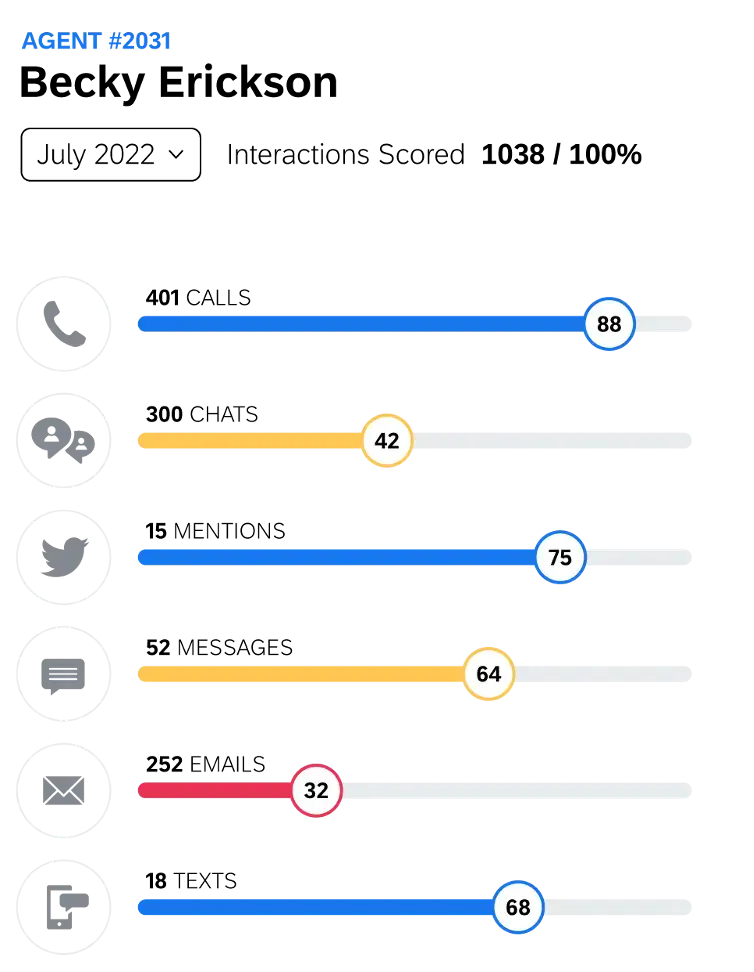
With traditional, manual contact center monitoring, only a small sample of calls are actually scanned through for compliance issues or data breaches. With the right contact center quality management software, however, 100% of calls, chat interactions, emails and other avenues of customer contact can be monitored in real time.
This software can automatically flag what’s being said – and what’s not being said – and trigger the correct workflow accordingly. contact center agent scoring is then performed automatically, with missed opportunities to engage in business-mandated behavior (upselling a product, for example) also noted.
Set up instant notifications to resolve issues in real-time
With 24/7 monitoring on 100% of contact channels, your contact center quality management software can instantly alert the right people when compliance violations occur. Rather than missing opportunities to improve or resolve important compliance breaches, your team can instantly take action.
This also helps to free up contact center supervisors’ time to focus on the important things, such as helping agents to resolve customer issues instead of only analyzing a small sample of interactions and hoping that critical issues are surfaced.
Train your agents on the job
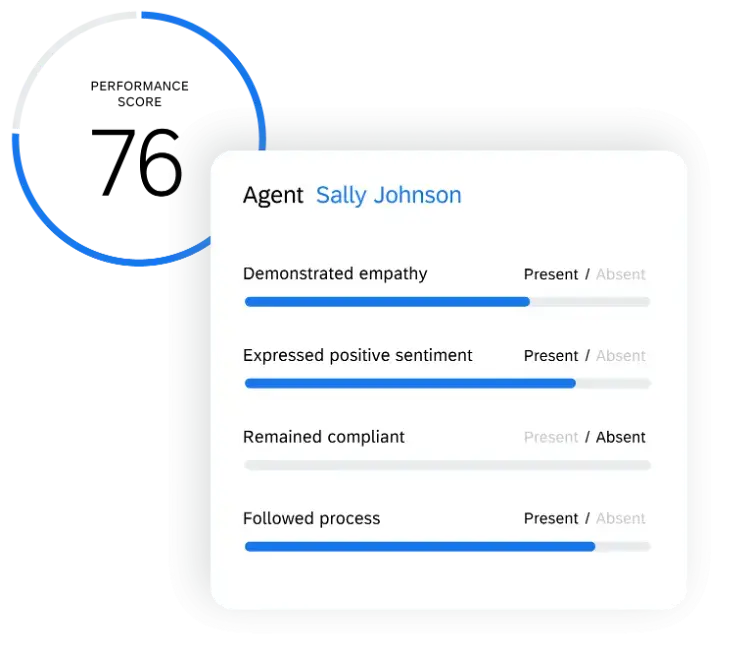
Scoring operational and experience behaviors for a later review is incredibly useful – but completing it in real time allows for agent coaching for quality assurance on another level. Flagging interactions that need action in real-time means you can fix issues and train contact center agents on the fly. This helps to avoid costly agent attrition by giving your employees a fair and transparent review of their performance – and it empowers them to do their best work.
Monitor every interaction, improve every experience
Investing in the right contact center quality management tools not only helps your business maintain compliance, it also helps deliver better customer experiences with reduced operational costs.
Instead of dedicating valuable time and resources to high-level monitoring of compliance, the best software allows you to deep dive into your customer interactions, diverting employee effort towards customer experience while driving compliance and protecting your brand and its revenue.
Qualtrics’ contact center quality management software uses AI and Natural Language Processing (NLP) to analyze every aspect of customer interactions, from script compliance to agent knowledge.
With Qualtrics, you can reduce the risk to your business’ reputation and revenue, with the industry’s best, most all-encompassing contact centers compliance toolset. That means exceeding customer expectations, lifting the employees’ experience, and handling compliance without lifting a finger.
Learn more about how to simplify your contact center processes in our latest contact center trends report, out now.