People have always had a ravenous appetite for new ideas and innovations. From technology to consumer goods, breakthrough, innovative products influence businesses, consumers, and society at large. Throughout history, certain product launches have sparked entirely new markets or dramatically shifted existing ones, setting new benchmarks and even impacting culture.
Since the 20th century, advancements in computing, entertainment, and everyday convenience have accelerated at an unprecedented pace. Whether it was the launch of personal computing, the rise of digital media, or the shift toward sustainable energy, each of these breakthroughs has left a mark on its industry.
In celebration of the last few decades of innovation, Qualtrics has highlighted 21 products that revolutionized their respective industries.

Computing and the Internet
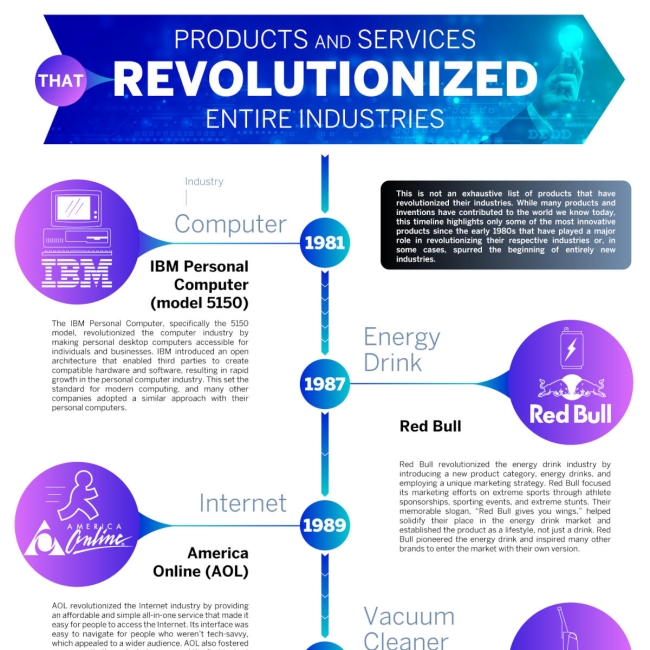
IBM Personal Computer (1981)
The IBM Personal Computer brought PCs into homes and small businesses, whereas before they were expensive, space hogging machines only for niche professionals. In addition to making computers accessible to everyday people, IBM set a new standard by allowing third-party companies to create compatible hardware and software for their units, thereby fostering the creation of independent computer programs and the open computing standards we have today.
America Online (AOL) (1989)
In many ways, AOL was the predecessor to modern social media. Through America Online, millions of people adopted email and internet chatting, sparking the digital revolution of the 90s.
Microsoft Windows 95 (1995)
Windows 95 made personal computers more user-friendly thanks to the introduction of the Start menu and taskbar. Additionally, the inclusion of an internet browser boosted the implementation of online services by making web surfing more accessible to users.
Google Search Engine (1998)
Google quickly dominated the internet search industry when it began ranking web pages based on relevance. In doing so, "Google" became synonymous with internet searches and is now an essential part of web surfing.
OpenAI ChatGPT (2022)
ChatGPT brought AI to the masses with its human-like responses, which could assist with everything from communication to research. By integrating AI-powered conversations and content creation into everyday life, it's transforming the future of work, customer service, and education.
Entertainment and Media
Sony PlayStation (1994)
When Sony's PlayStation adopted CD-ROM technology, it enabled the development of more complex and visually stunning 3D games than were previously possible on cartridges, influencing the way we perceive video game graphics to this day.
Amazon (1995)
Upon its launch, Amazon made online shopping fast, convenient, and reliable. Its innovations in e-commerce logistics and customer service have created a new standard for consumers.
Craigslist (1995)
Craigslist made it simple for local people to buy, sell, and trade goods online. By replacing newspaper classifieds with a free, digital alternative, it connected people seeking jobs, apartments, and secondhand items in an entirely new way.
Netflix (1998)
Starting as a DVD rental service, Netflix revolutionized entertainment when it moved to streaming. By making content instantly available online, it completely disrupted how audiences watch movies and TV shows, leading to the streaming boom.
Facebook (2004)
Facebook redefined social networking by making it easier than ever to connect with friends, share content, and engage with businesses. Additionally, when the platform introduced its "Like" button in 2009, nearly all platforms followed suit, setting a new standard for social media engagement.
YouTube (2005)
YouTube cut out the Hollywood middlemen and put video creation and sharing into the hands of everyday users. It opened up new career opportunities and transformed the entertainment industry, with user-generated content becoming a major force in entertainment.
Nintendo Wii (2006)
The Nintendo Wii made history by introducing motion controls that made gameplay more interactive. Its appeal to a broad audience, including families and non-traditional gamers, turned gaming from a niche hobby into one that even a grandmother could enjoy.
Mobile and Digital Services
Apple iPhone (2007)
At a time when mobile phones were still mainly used for calls and texts, the iPhone was a pocket-sized upheaval. By combining a phone, music player, and internet browser into one sleek device, it set the standard for modern smartphones and kickstarted the app economy.
Amazon Kindle (2007)
By making thousands of books available in a single, lightweight device, Amazon's Kindle completely revolutionized the way people read. Additionally, it created an entirely new industry when it opened the doors for self-publishing, allowing authors to reach readers without the gatekeeping of traditional publishers.
Airbnb (2008)
Airbnb turned spare rooms and vacation homes into lodging options for travelers worldwide. By connecting homeowners with guests, it has turned the hospitality industry upside down, giving travelers more affordable and unique options.
Spotify (2008)
Much like Netflix, Spotify completely transformed the music industry by introducing an unlimited streaming model. Rather than purchasing albums or individual songs, subscribers could pay one monthly fee to access millions of songs from various artists whenever they wanted.
Uber (2009)
Uber made catching a ride as easy as tapping a button. By offering a faster and more convenient alternative to taxis, it shook up the old-school taxi model and helped kick-start the gig economy.
Everyday Products
Red Bull (1987)
Red Bull didn't just introduce a new drink; it created an entirely new market in the U.S. By pairing its energy drink with extreme sports marketing, it turned a beverage into a global lifestyle brand.
Dyson DC01 Vacuum Cleaner (1993)
Dyson reinvented vacuum cleaning with its bagless cyclonic technology, offering stronger and more consistent suction. This innovation set the standard for modern vacuums and pushed the industry toward more efficient designs.
GoPro HERO (2004)
GoPro changed the way people capture action and adventure. Its compact, durable cameras made it easy to film everything from extreme sports to everyday moments, inspiring the rise of adventure vlogging and user-generated content.
Tesla Model S (2012)
Tesla proved that electric vehicles could be powerful, stylish, and practical. The Model S shattered stereotypes about electric vehicles (EVs) and pushed the auto industry toward a more sustainable future.
Companies That Revolutionized Their Industries
These products not only transformed their industries when they were introduced, but they also continue to shape technology, entertainment, and everyday lives. Each innovation pushed the boundaries of what was possible, challenging competitors to keep pace and refine their offerings.
For businesses seeking to stay ahead in a rapidly evolving world, effective communication and adaptability are essential. At Qualtrics, we provide cutting-edge communication solutions that enable companies to connect and enhance their brand experience with ease. Contact us today to learn how our services can support your innovation journey.