


When you know how satisfied your customers are with your brand, products and services, you’ll be able to predict:
- How likely they are to return
- Their future spending
- How willing they are to recommend you to others
- What you are doing well and what needs to be improved
When you improve customer satisfaction, customers will return, be more loyal, spend more, and refer more customers. It’s your business’s best strategy for growing and retaining customers.
What is customer satisfaction?
Customer satisfaction is all about completion. We define customer satisfaction as "the result of fully completing a transaction or experience to the standard that your customer expected". And because every customer has different needs, you must define what "completion" looks like for your specific audience.
Every interaction must have a satisfactory outcome, giving customers a clear sense that what they needed was delivered—customer satisfaction.
For example, you’re grocery shopping online:
You expect the website to show accurate stock, your delivery to arrive fresh and in good condition, and no unexpected substitutions for items that weren’t available.
Satisfactory completion occurs only when all the groceries you specifically ordered arrive, and they’re high quality. You unpack your delivery, and you feel relieved and satisfied that you have everything.
A completion fail occurs when, for example, instead of wild-caught salmon, you receive a whole fresh octopus substitution in your delivery. The job is not complete because the delivery did not meet your expectations—you’re not a satisfied customer.
In the case of the unwanted octopus, the store may respond immediately to your complaint, take it off the bill and send wild-caught salmon when available. But the experience failed because it didn’t meet your expectations. The gold standard in customer satisfaction is to deliver—and complete—the expectation first time.
Free eBook: The CX Catalyst Report
Why is customer satisfaction important?
Our research shows that satisfied customers are:
- 4.1x more likely to recommend your brand
- 3.8x more likely to trust you
- 2.3x more likely to purchase from you again
People prefer to buy more from the brands they love. Brands that consistently deliver earn deeper loyalty and a greater share of customer spend. To keep customer loyalty, you need to offer both premier service and high-quality products.
Why measure customer satisfaction?
It’s easy to assume customers are satisfied if they’re not complaining, nor returning items for exchange or refund. But this assumption misses critical context. Customer satisfaction, in context, gives you a huge amount of insight that you can use to improve your business.
Customers share feedback about their satisfaction with your business, every day—in both unsolicited and solicited ways. You must take the time to listen and understand their feedback.
Small business owners have an advantage when it comes to listening to their customers. Most likely, they interact with their customers directly and hear them, picking up useful information to help grow their business and create loyalty. As companies grow, and hire more people in customer care, it becomes harder to listen cohesively to customers.
Large, expanding companies need additional ways to help them listen to and understand their customers’ satisfaction. They may start to read online reviews or posts about their brand. They implement surveys or in-store feedback. Eventually, customers use all available channels to express feedback about their levels of satisfaction. The volume of data becomes so big that it needs measuring.
How to measure customer satisfaction
So you know the benefits that customer satisfaction can bring to your business. But how do you measure it? Where do you even start?
Here’s our step-by-step guide to understanding each part of the customer interaction, with tips to get your customer satisfaction program up and running quickly.
1. Know who your customer is
Let’s unpack what we mean by "customer". There are two distinctions—the customer who buys your product, and the one who uses it:
- The economic buyer: This customer makes the purchase, but may not be the person using the item.
- The service user: This customer is not necessarily the economic buyer, but their experience as a user may contribute to the economic buyer’s opinion.
When we measure satisfaction, it’s important to know specifically whose satisfaction we are measuring, because there are some situations where one customer is more important than the other.
Business-to-business (B2B) customers and Healthcare often add a layer of complexity to knowing your customer:
- For B2B, the economic buyer is usually multiple people known as decision makers; there may also be an administrator/distributor of your product and then there are the end users, which could equate to hundreds or thousands of people.
- For Healthcare, there are patients, family caregivers, and sometimes third party caregivers, all add to the complexity of defining who your customer is, and whether you listen to all of them.
2. Understand the customer journey
The customer journey is like any other journey, consisting of:
- A starting point (becoming aware of your brand, products or services)
- Steps along the way (researching, comparing, purchasing, after-sales experience)
- Destination (being a satisfied customer, returning, recommending to others, advocacy)
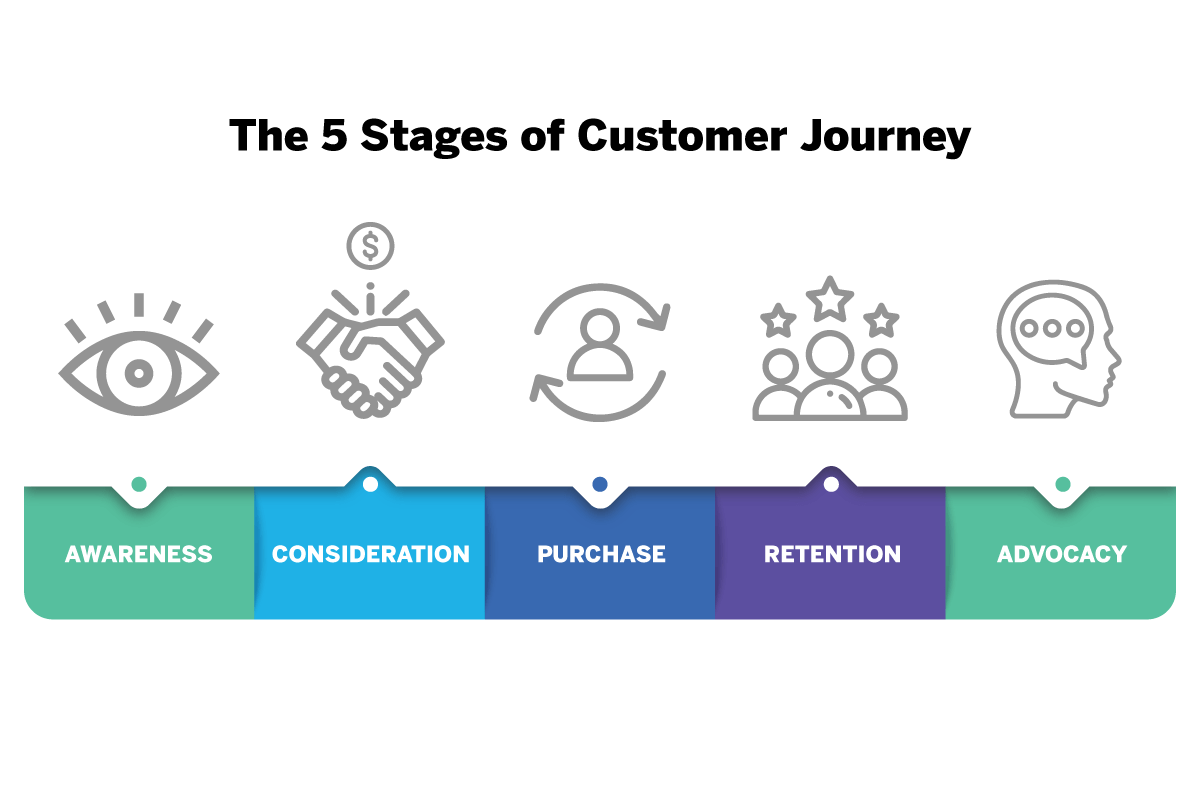
All along the customer journey are touchpoints—the various moments at which a customer will directly, or indirectly, come into contact with your brand. These include: advertising, social media, website, welcome/thank you emails, bricks-and-mortar stores, customer agent (cashier, contact center, sales rep), product reviews, subscription renewals, influencer recommendations, peer reviews, and point of sale.
By listening to and understanding these touchpoints in the customer journey, you can compare them, to see what’s working, and what isn’t. Identify the moments of the greatest emotional load—the points in the experience that can make or break it for the customer. These are the moments the customer felt, and will remember at the end of the experience.
When you focus on why customers feel the way they do, and why satisfaction is lower (or higher) at certain touchpoints than you’d expect, you can identify the actions you need to take to improve their experiences and better satisfy their needs.
3. Understand customer satisfaction measurement
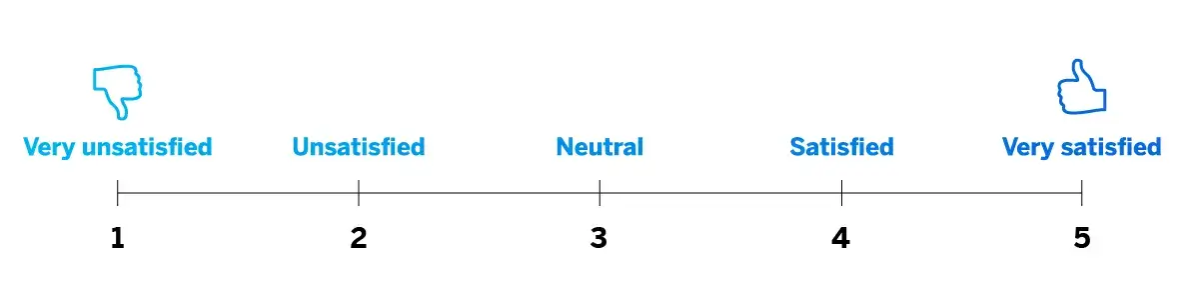
There are three main customer satisfaction metrics: Customer Satisfaction (CSAT), Net Promoter Score (NPS), and Customer Effort Score (CES), and three enrichments: Sentiment, Effort and Emotional Intensity.
Traditionally, organizations have used CSAT, NPS, and CES in the form of surveys to gauge customer satisfaction.
- Customer satisfaction score (CSAT) measures customer satisfaction with a product or service, describing how your customer feels about a recent purchase. It’s transactional.
- Net Promoter Score (NPS) measures the overall relationship the customer has with your organization so you can track their feelings about your brand, over a longer term. It’s relational.
- Customer effort score (CES) measures how much effort a customer has to put in to get an issue resolved, a request fulfilled, a product purchased or returned, or a question answered.
The three enrichments that can be applied to unstructured data when a satisfaction score is not available are: Sentiment, Effort and Emotional Intensity. These are similar to a survey score but with the added benefit of using the customer’s words to help understand how they felt after an experience.
- Sentiment measures the degree to which an attitude toward a situation or event is positive, neutral or negative.
- Effort measures how much effort a customer has to put in to get an issue resolved, a request fulfilled, a product purchased or returned, or a question answered.
- Emotional Intensity measures the intensity of a reaction usually directed toward a specific object or situation
However, omnichannel CX measurement methods are increasingly standard, capturing feedback across digital, social, and contact center channels rather than relying on surveys alone. Leveraging Sentiment, Effort and Emotional Intensity here can be useful.
XM® for Customer Experience, for example, collects and unifies data from multiple sources, including customer satisfaction surveys, calls, chats, social media, and reviews, providing a 360 view of your customer experience.
4. Decide how you are going to capture customer feedback
You have options for feedback capture—solicited and unsolicited feedback. Let’s explore those:
Solicited feedback
You gather solicited feedback when you proactively ask customers for their input. It’s usually in the form of customer satisfaction surveys or feedback boxes on your website or app.
As you design your survey, bear these things in mind:
- Put the CSAT question at the top
- Ask a series of driver questions (no more than 5) to help you dig deeper into the given score and understand what factors influenced it
- Add a section for comments, but avoid making this mandatory
- Sample your customers for a representative view
Surveys you could use include post-purchase evaluations, periodic customer satisfaction surveys, and continuous customer satisfaction tracking.
If you’re tempted to implement only solicited feedback, bear in mind that our 2026 Consumer Experience Trend Report found that surveys are no longer enough to understand customer behavior.
Since 2021, direct customer feedback has declined, with:
- Only 3 in 10 respondents explaining why they leave
- 15% fewer customers posting on social media after a bad experience, compared to five years ago
- 29% being less likely to share feedback directly
- 30% not telling anyone—they’re just switching brands silently
This, therefore, puts the onus on you to piece together emerging trends in real time—the behavioral cues, the abandoned carts, and the call center transcripts. Which is why we recommend you also use…
Unsolicited feedback
Unsolicited feedback comes to you without asking. You’ll find it in company emails, and across the web, particularly on third-party review sites and social media channels, unsolicited feedback and ‘contact us’ forms, and call center transcripts.
Unsolicited feedback is particularly rich and detailed because it’s given voluntarily and intentionally by motivated people, making their feedback highly actionable. You’ll get a more honest, objective view from unsolicited feedback than from opinions you’ve directly asked for.
Feedback may be structured (think survey tick boxes) or unstructured (conversations that need AI tools to evaluate).
5. Bring your BOX data together
Link your solicited and unsolicited feedback to your behavioral data (B-data), operational data (O-data), and experience data (X-data). By taking this holistic approach, you’ll see at a glance the economic impact customer experience has on other aspects of the business. Does improvement result in increased usage? More renewals? More spending? Increased profits? You’ll begin to see how improving customer satisfaction impacts your key business metrics.
6. Take action to improve customer satisfaction levels
Once the feedback starts rolling in across your specified touchpoints, you’ll be able to start identifying action areas. The best customer experience software removes a lot of the legwork by automatically collecting feedback, applying topic analysis to surface themes and score drivers, and delivering targeted action recommendations by ticketing processes or Agentic AI workflows through role-specific dashboards.
7. Track improvements in customer satisfaction
Measuring customer satisfaction isn’t a one-off. There’s so much valuable information you can gather (assessing seasonality, experiences in different markets or territories, how improvements to product or employee experiences increase customer satisfaction…). It’s easy if you use software that helps you listen continuously and understand your solicited and unsolicited feedback. Where are the changes in customer satisfaction? Is there an area that satisfies your audience less? If so, what’s driving it?
How to improve customer satisfaction
Investing in omnichannel customer experience is your surefire way to improve customer satisfaction.
With omnichannel, customer data, contact center interactions, and customer journey insights unite to give your teams a holistic, overarching view of the lived customer experience.
Statistics show that:
- Customers who use more than one sales channel spend 4% more in-store, and 10% more online
- Brands that use omnichannel strategies retain 89% of their customers
- 73% of retail customers already consider themselves to be omnichannel shoppers
- If omnichannel customer support resolves issues, 64% of customers will spend more
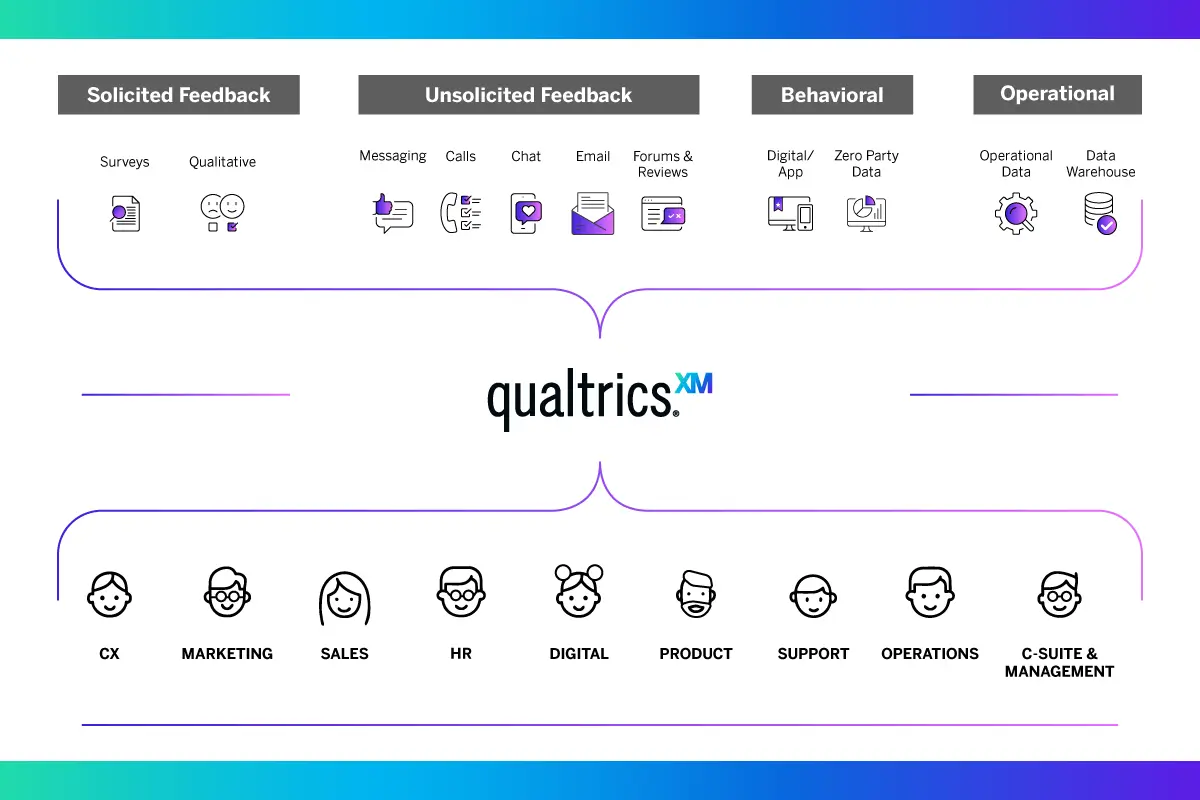
Our Qualtrics® XM Platform®, for example, takes complex customer data collected from various touchpoints and transforms them into actionable insights—helping you deliver seamless, satisfying customer experiences across multiple channels.