
Venues New South Wales + Qualtrics
Venues New South Wales + Qualtrics
Every year, millions of visitors walk into Venues NSW events expecting more than a seat—they expect transport that works, staff that helps, and an experience worth repeating. But for an organization that owns the customer relationship end-to-end while controlling only parts of the experience, vague complaints don't move stakeholders.
70%
increase in verbatim feedback for major events compared to pre-AI implementation
Increased customer loyalty driven by operational improvements informed by insights
XM maturity score uplift from 1.33 to 2.33
Millions of visitors, not enough answers
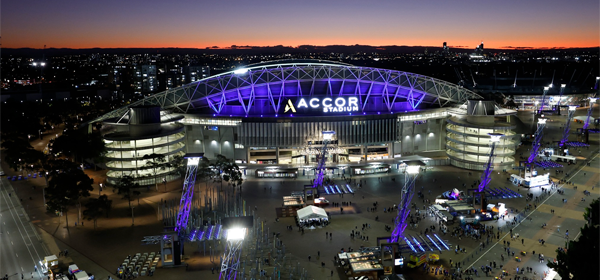
From Taylor Swift concerts to the National Rugby League Grand Final to major entertainment events across New South Wales—Venues NSW manages some of Australia's most iconic sporting and entertainment venues, welcoming millions of visitors annually.
Every event generates feedback. Visitors submit surveys. Comments arrive in inboxes. The data accumulates. But for the government agency responsible for managing this entire customer experience, volume masked an opportunity. They were capturing customer responses, yet those responses weren't revealing what actually mattered.
A visitor would write "trains shocking" or "difficulty getting home." Another would complain about ticket prices. Generic frustrations without the texture needed to understand why or what to do about it. High-level sentiment without the specificity required to influence change.
For an organization that owns the customer relationship end-to-end but controls only parts of the experience—ticketing runs through external partners, sporting clubs manage on-field operations, transport agencies handle the journey home—this gap meant they couldn't surface data driven insights for their stakeholders. They had complaints, but not evidence.
"We don't have control over big parts of the customer journey," Tom Dellas, the Customer Experience Manager at Venues NSW explained. "We're not the final decision maker of the ticketing website, for example. Or if you look at the checkout, a lot of the decisions on the field are going to be run by the promoter or by the sporting club."
To influence stakeholders and drive change, Venues NSW needed concrete stories grounded in data, not hunches or vague complaints.
The invisible gap: What Venues NSW was missing
People rarely volunteer detailed praise. A visitor with a great experience typically responds with "it was good" and moves on. That brevity reveals nothing about what created the positive experience, what should be replicated, or what visitors truly valued.
For an organization that needed to celebrate successes internally and share winning strategies with partners, this was costly. Positive stories that could drive loyalty and inform improvements were buried under single-word responses.
Meanwhile, Venues NSW's business imperatives demanded deeper insight. The organization tracks commercial KPIs: attendance, spend per head, repeat attendance. The previous year had shown promise—6 out of 8 home teams saw attendance increases. But they'd hit a plateau. To push forward, they needed feedback that went beyond surface-level sentiment scores.
A problem-driven approach to AI
When Venues NSW began exploring AI-powered customer experience tools, they didn't chase technology for its own sake. The decision was practical: they had specific business problems and wanted to test whether newer capabilities could solve them.
"Our engagement with AI wasn't driven by a desire to be at the forefront of adoption," Tom emphasizes. "It was problem-driven. We had challenges we needed to solve."
In July 2025, Venues NSW became the first public sector organization in Australia and New Zealand to deploy Qualtrics AI. They pursued it because the capabilities aligned with what they lacked: the ability to ask intelligent, contextual follow-up questions in real time and to process large volumes of verbatim feedback for patterns humans would miss.
They expanded their core post-event survey program—already their feedback workhorse—to incorporate conversational elements. When a visitor indicated dissatisfaction or gave vague feedback, the system now asked probing follow-up questions in the moment, gathering depth that had previously remained out of reach.
A frustrated visitor might write "trains shocking," and the system would respond: "Can you tell us more about what happened with the trains?" The response revealed the actual experience: a specific wait time, communication failures, operational chaos. Each detail became actionable intelligence.
On the back end, they built custom dashboards and leveraged automated analysis to shift from manual review to systematic pattern extraction—giving their team the ability to spot what mattered most across thousands of comments.
What clarity actually looks like
The difference materialized in the data almost immediately. A visitor's vague complaint—"Difficulty getting home after the event"—became something far more useful when the system asked a simple follow-up question.
"The queues for trains were disorderly and chaotic with people pushing in. It took over 90 minutes to get on a train but once on we got home quickly."
Multiply that by thousands. In Q2, Venues NSW gathered 3,417 original feedback entries. When analyzed systematically, those entries yielded 2,355 distinct, actionable insights—a 68.92% increase in understanding compared to what they would have captured before.
That's the difference between a complaint and actionable intelligence. It isolates the exact problem (queue management and communication during boarding, not transit infrastructure), identifies the moment it became acute, and points directly to where Venues NSW's partnership influence could matter—working with Transport NSW on crowd protocols.
Across their data, patterns emerged that had been invisible before. Guests mentioned costs repeatedly, but framed ticket pricing in relation to the broader event experience—the money already spent on transport, the value of the seat, expectations set by comparable events. That insight let Venues NSW approach ticketing partners with a deeper understanding of how pricing rippled through customer sentiment.
Operational inefficiencies surfaced. Match-day communication gaps became legible. And positive feedback evolved from "it was great" to detailed accounts: what made the experience smooth, which staff interactions stood out, what created moments of delight.
"The tool changed the way we use verbatim feedback," Tom noted. "It became something executives actually want to look at, because it tells a story instead of just listing gripes."

“Cracking the code on instant feedback is probably the next big thing for us. If we can resolve something during the event, it creates a much better experience, and will lead to cost savings since we may not have to do as many refunds.”
Tom Dellas
Customer Experience Manager
Venues New South Wales
How work actually changed
For the Venues NSW team, the practical effect was subtle but powerful. The way they did their jobs remained the same, but efficiency and quality improved measurably.
Previously, responding to negative feedback meant costly interventions: refunds, follow-up contacts, resource allocation. The team worked reactively: issue surfaces, issue addressed, insight captured—without context to prevent recurrence.
With richer feedback arriving automatically, resolution became targeted and strategic. A complaint about train queues wouldn't just trigger a refund. It would feed into evidence for Transport NSW, alongside similar feedback, with specific recommendations grounded in visitor experience. The same approach applied to ticketing partners on pricing concerns or sporting clubs on match-day operations.
"This has been a really good way for us to get much more texture on our positive feedback," Tom says. "We can now celebrate those stories in the way that we'd like to."
Proof points that resonate
By year-to-date, Venues NSW almost doubled its CX maturity score. Six out of eight home teams saw attendance increases in the previous financial year, with the trajectory continuing.
Changes informed by AI-clarified feedback—improvements to match-day operations, better transit communication, targeted F&B strategy shifts—have driven sustained attendance growth and increasing repeat attendance.
Complaints declined. Spend per head increased. When Venues NSW approached Transport NSW with specific data about queue management, they had evidence. When they worked with ticketing partners on pricing, they could explain how costs factored into the broader experience. When they collaborated with sporting clubs on operations, they brought data about what worked.
"The rising tide lifts all ships," Tom explains. "We have varying levels of engagement from different partners. But when we're able to work together to implement real changes—whether in match-day operations, communications, or other areas—we see tangible results. Whether that's attendance increases, reduction in complaints, improvements in return visits, or increased F&B spend."
Real-time: The next frontier
Venues NSW is now working on capturing and acting on feedback in real time—during events, not after. The goal is to surface operational issues (transport delays, facility problems, communication breakdowns) while guests are in the venue, enabling immediate response.
A refund processed after the fact is a cost. A problem solved during the event is a guest retained, reputation preserved, loyalty reinforced.
Down the line, Venues NSW envisions Experience Agents—AI systems that can close the loop with customers autonomously, addressing concerns in real time during events. The playbook shifts from retrospective analysis to proactive experience management.
About Venues New South Wales
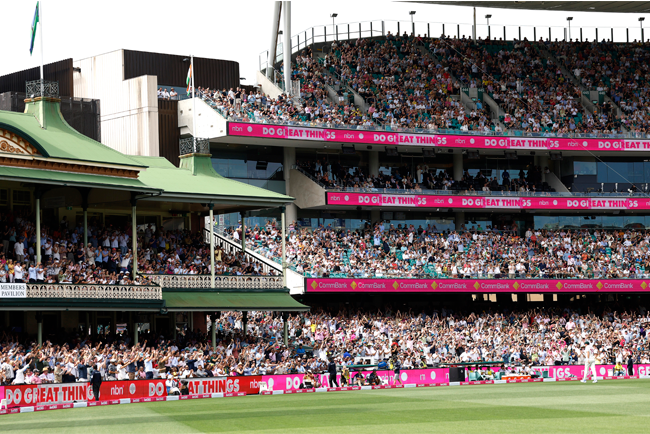
Venues New South Wales (NSW) is a NSW Government agency which manages six stadiums and two entertainment centres in five precincts across Greater Sydney, Hunter and Illawarra regions. The Venues NSW network comprises more than $4bn of public community assets, which host some 500 major sport and entertainment events in undisrupted years, attracting upwards of five million attendees each year.
Industry
Government Organisation Size
Enterprise
Region
APJ