

Automated Text Analytics
What's on this page
About Automated Text Analytics
Do you have a set of text interactions that you’d like to analyze for common topics and themes? You can jumpstart a topic model by using Artificial Intelligence (AI) to build a topic hierarchy. Using a diverse set of inputs including your unstructured customer data, use case, persona, industry, and additional context information, you can leverage AI to build a topic hierarchy, enabling you to identify the themes most important for your business use case.
Qtip: This page covers creating an automated topic model in Qualtrics. See Topic Hierarchy Generator in XM Discover for information on building an AI-Assisted model in XM Discover.

Qtip: You cannot use AI to build topic models based on any EX projects (Engagement, etc).
Qtip: You can use automated text analytics and Text iQ on the same data source.
Requirements
User Permissions
To build a topic model using AI, you need the Automated Text Analytics user permission enabled for your account. If this permission is disabled, the “Text Analytics” section will not appear in your navigation menu.
Supported Data
You can analyze unstructured data from the following Qualtrics project types:
- Survey projects
- Imported data projects
- Online reputation management project
- Email data project
- Chat data project
- Voice project
Generating a Topic Model
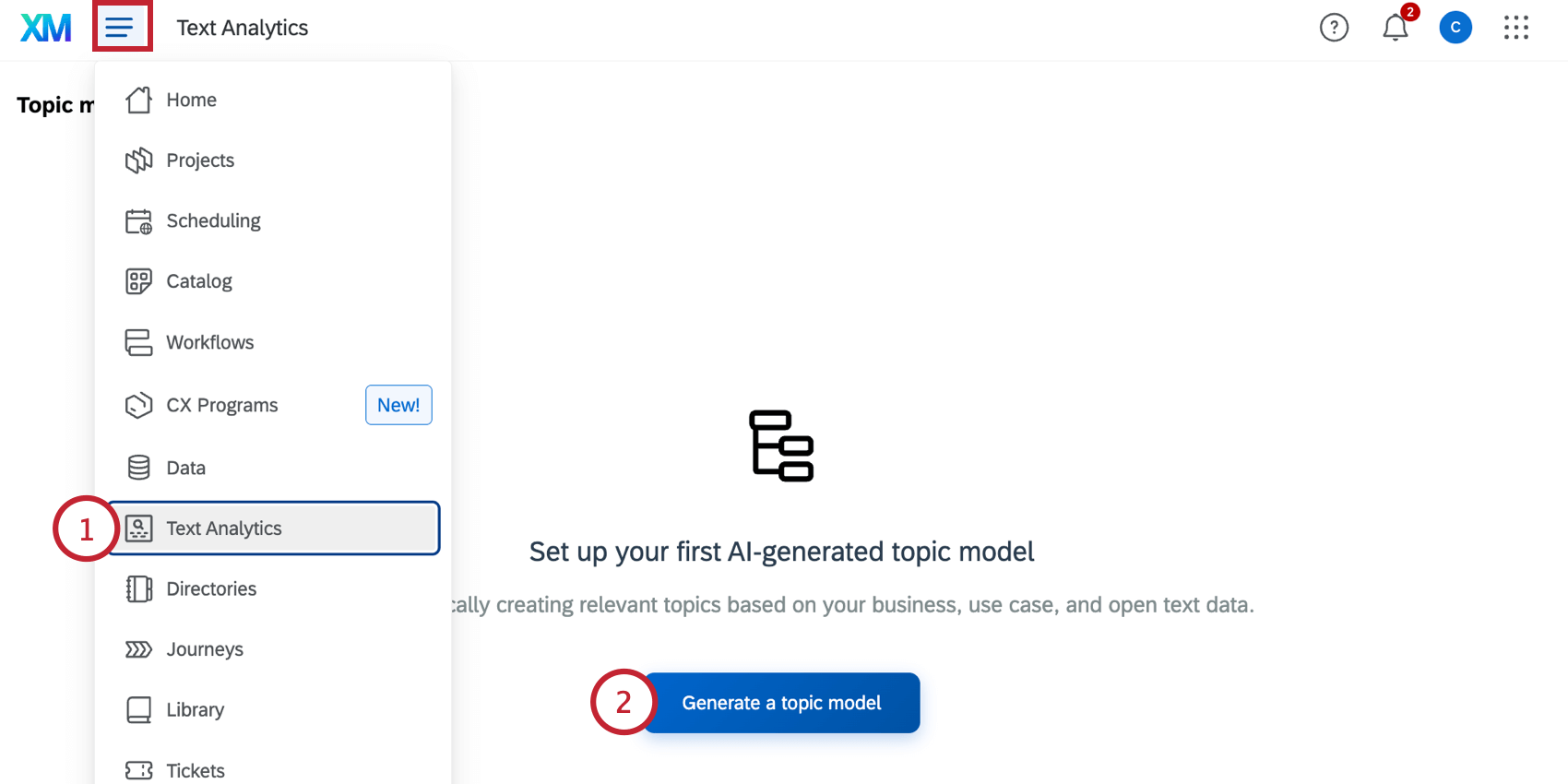
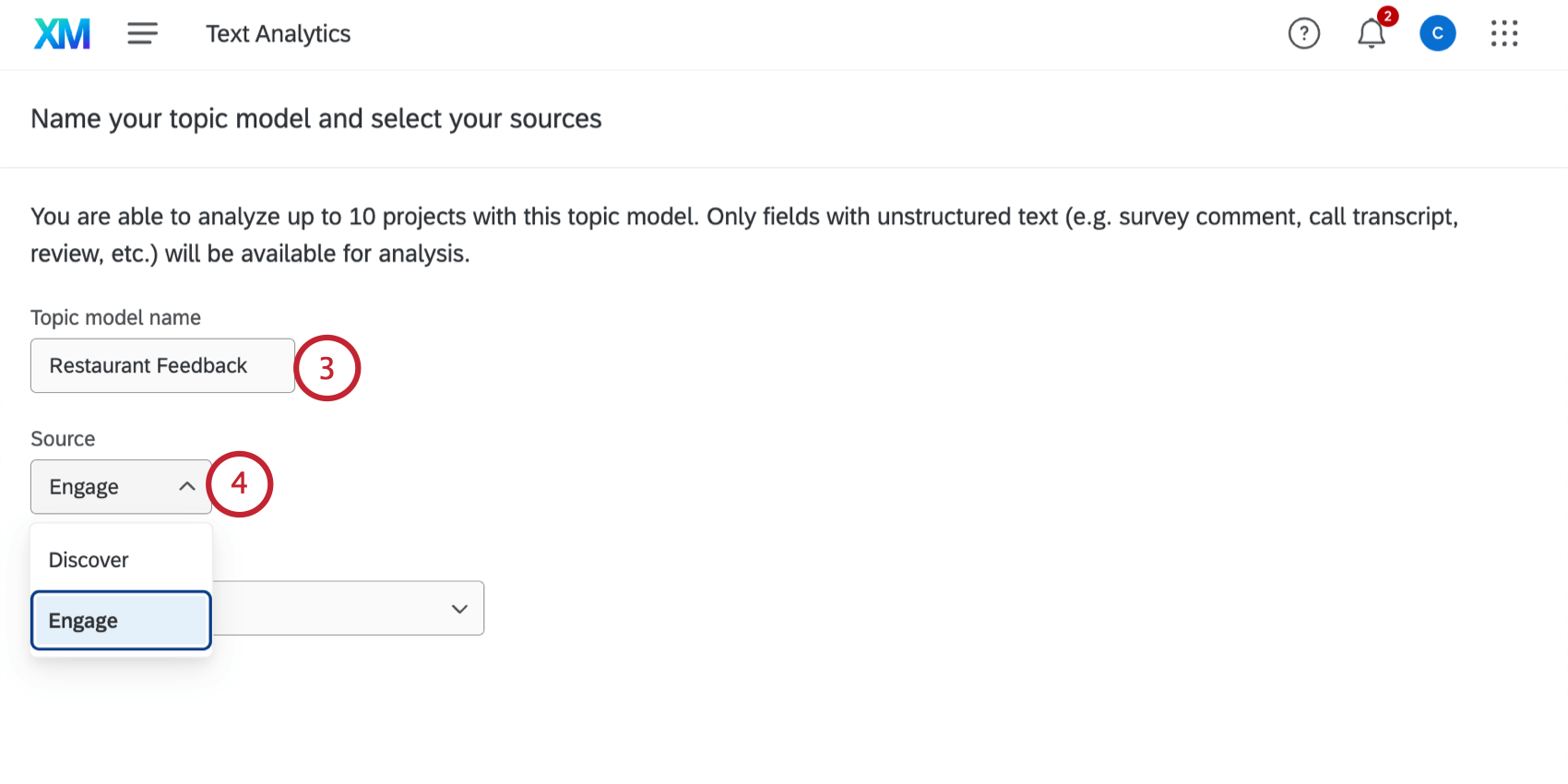
Qtip: See Topic Hierarchy Generator in XM Discover for steps on generating a model using data from XM Discover.
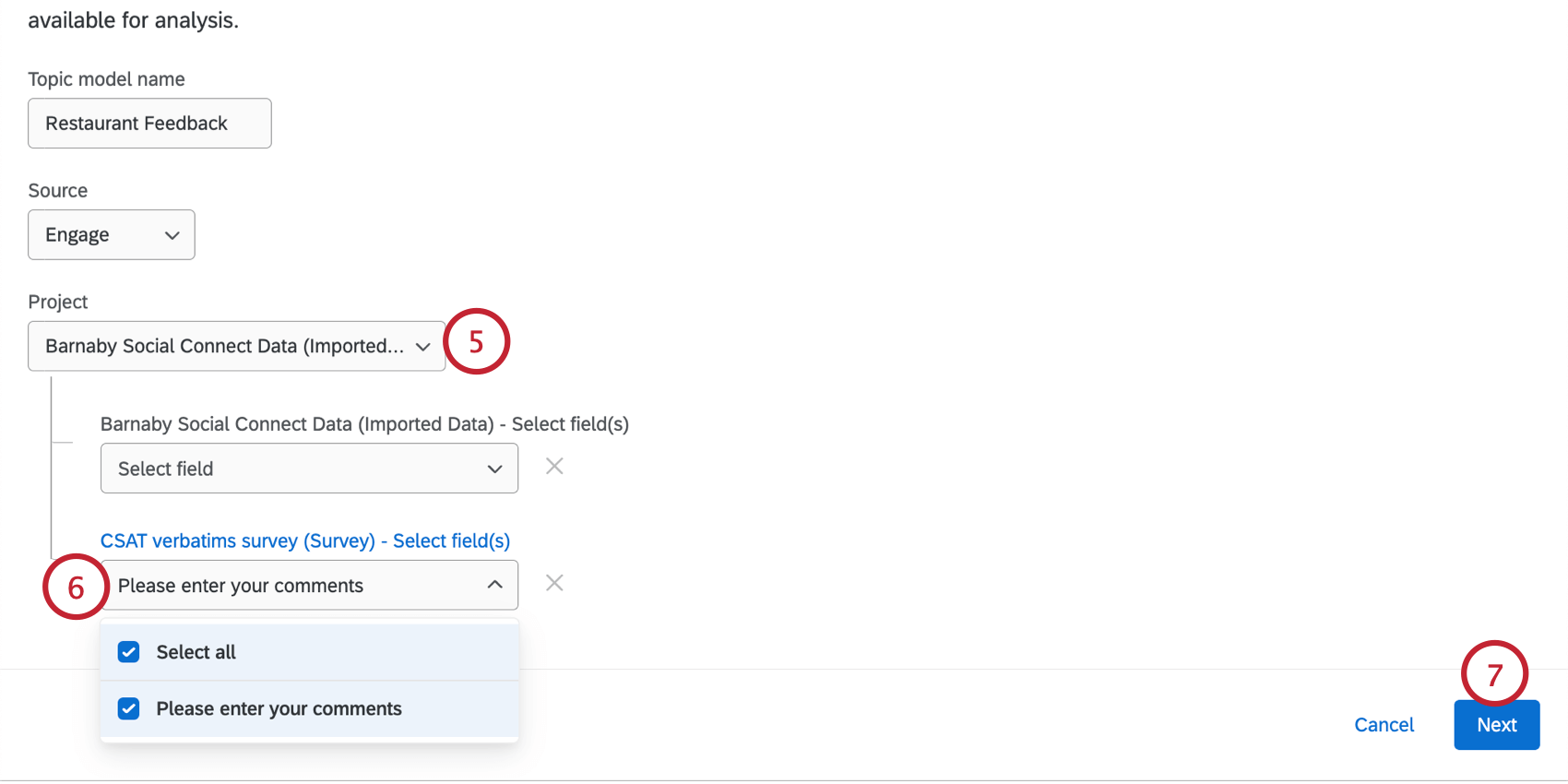
Qtip: See the Requirements section above for information about what data is eligible to be selected here.
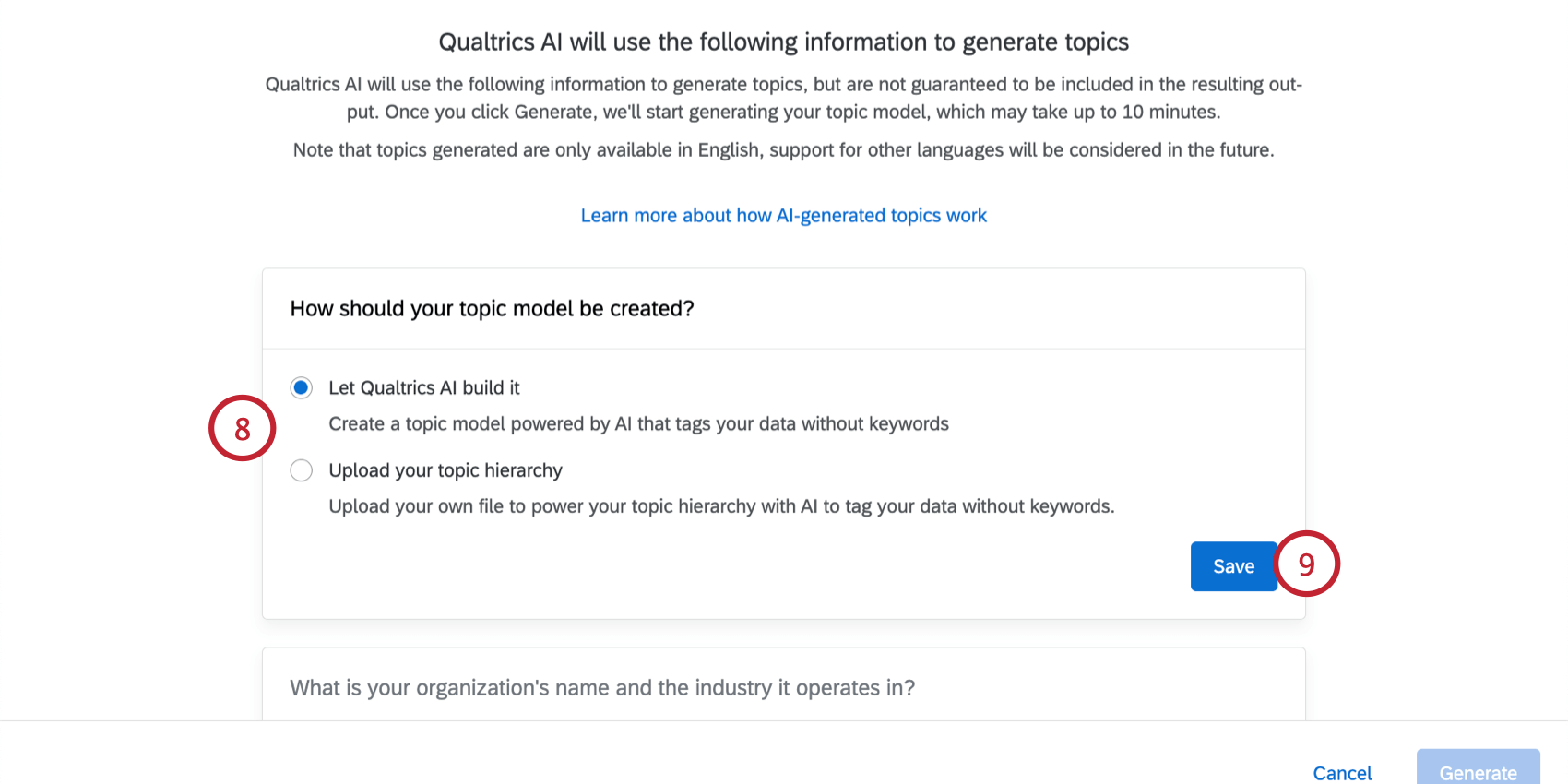
Qtip: The “Upload your topic hierarchy” option is useful if you have an existing topic hierarchy in JSON format that you’d like to reuse instead of generating a new hierarchy.
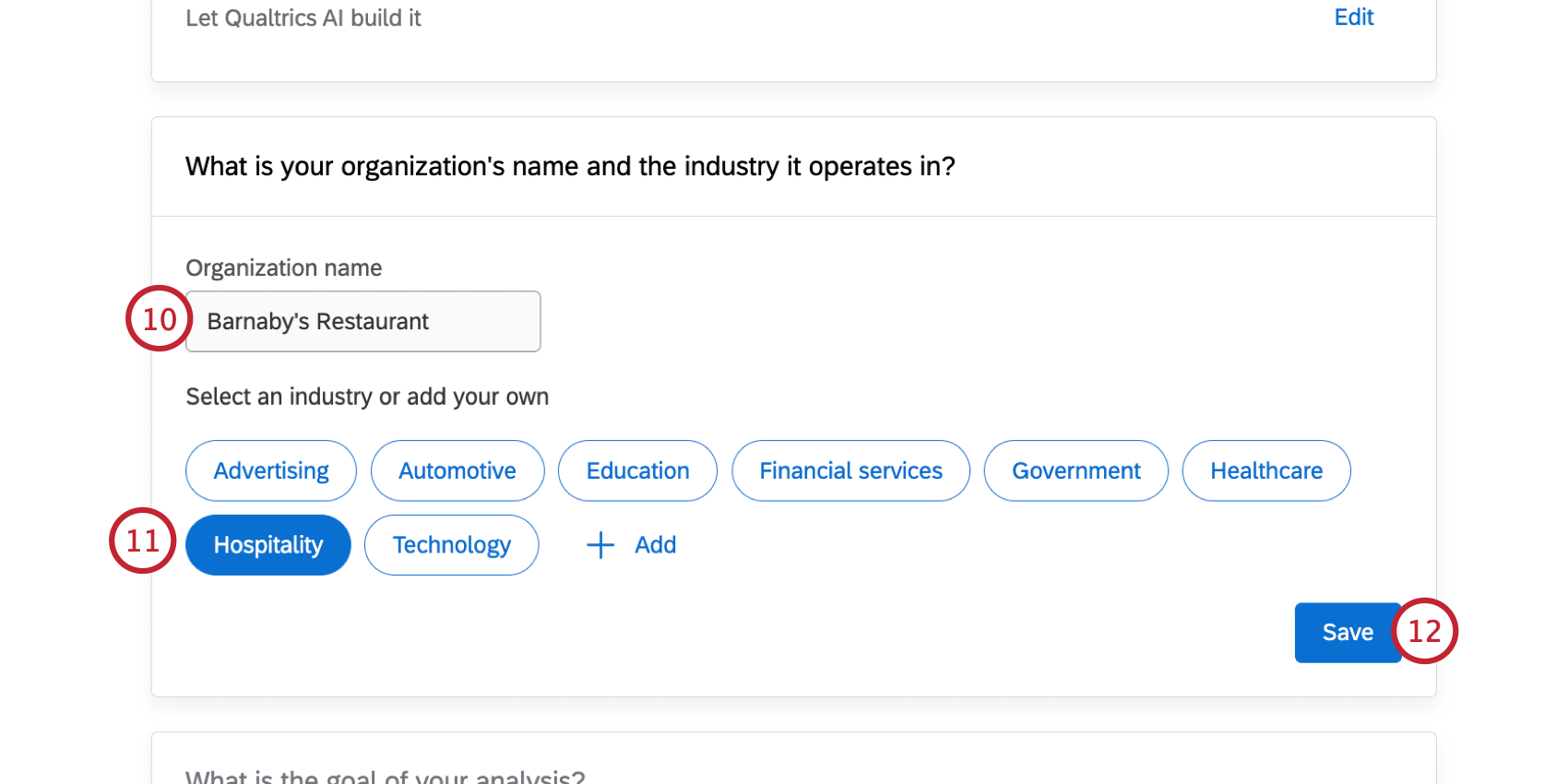
Qtip: If your industry isn’t listed here, you can click “Add” and then specify your industry in the text box.
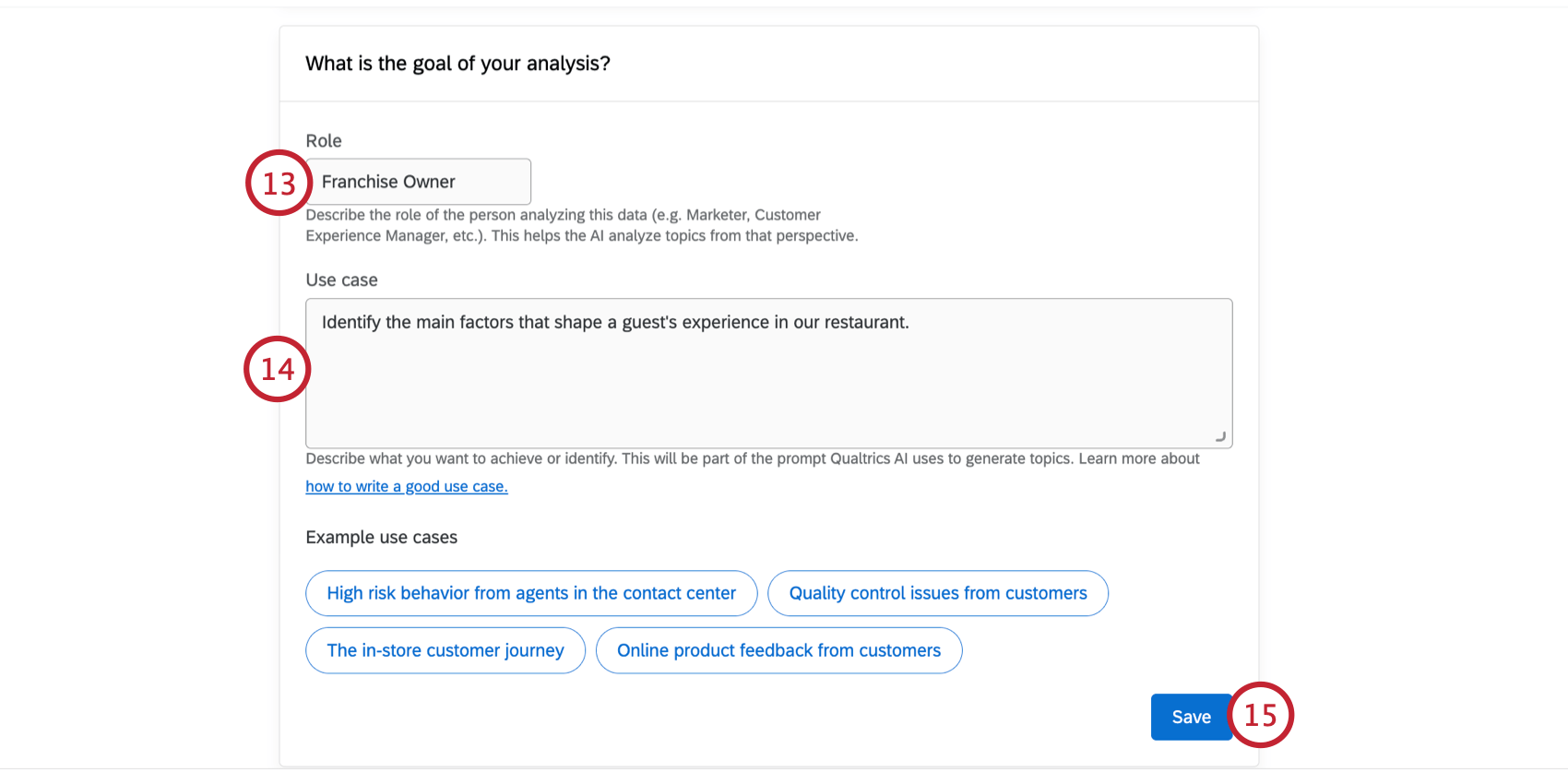
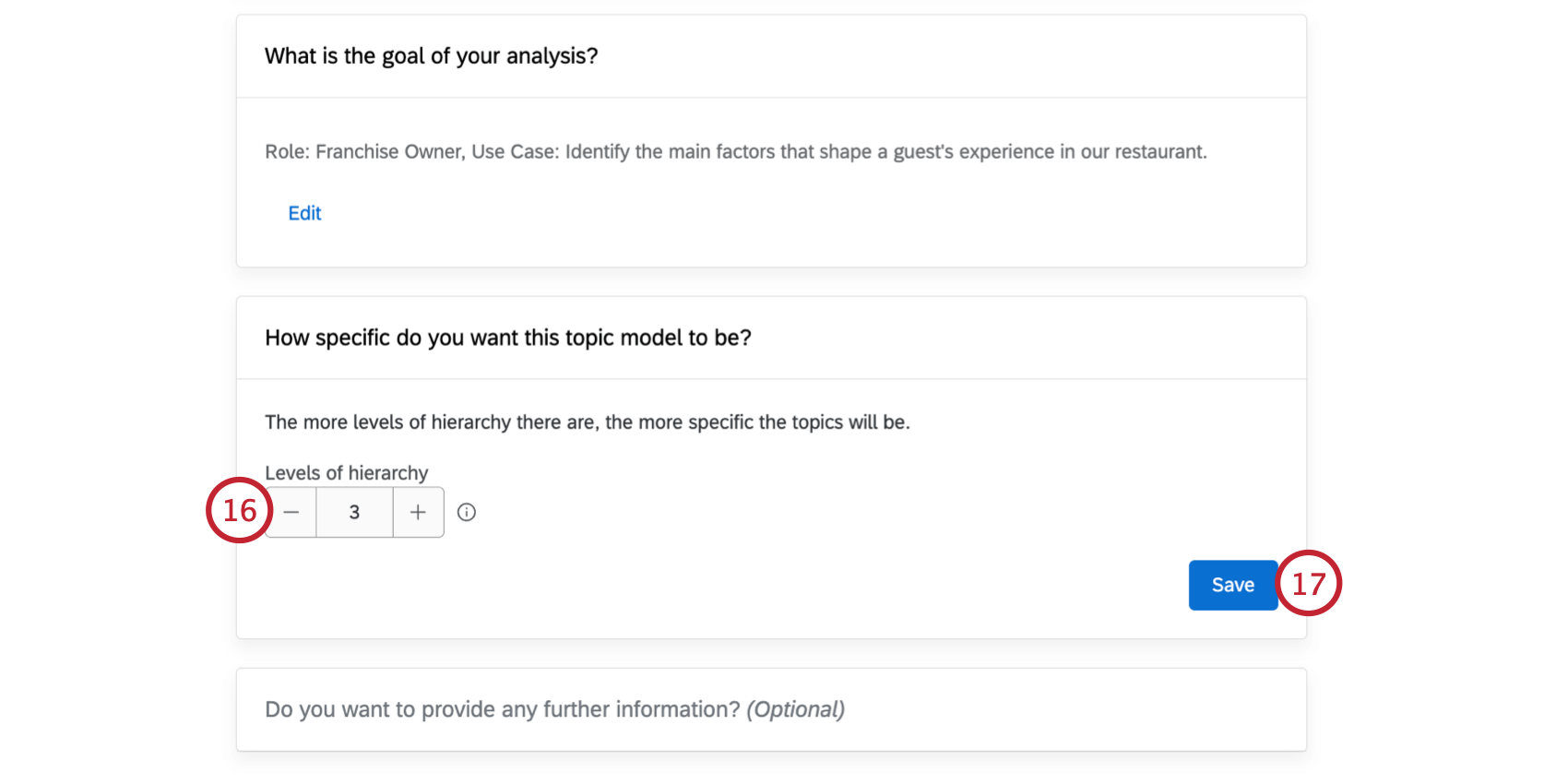
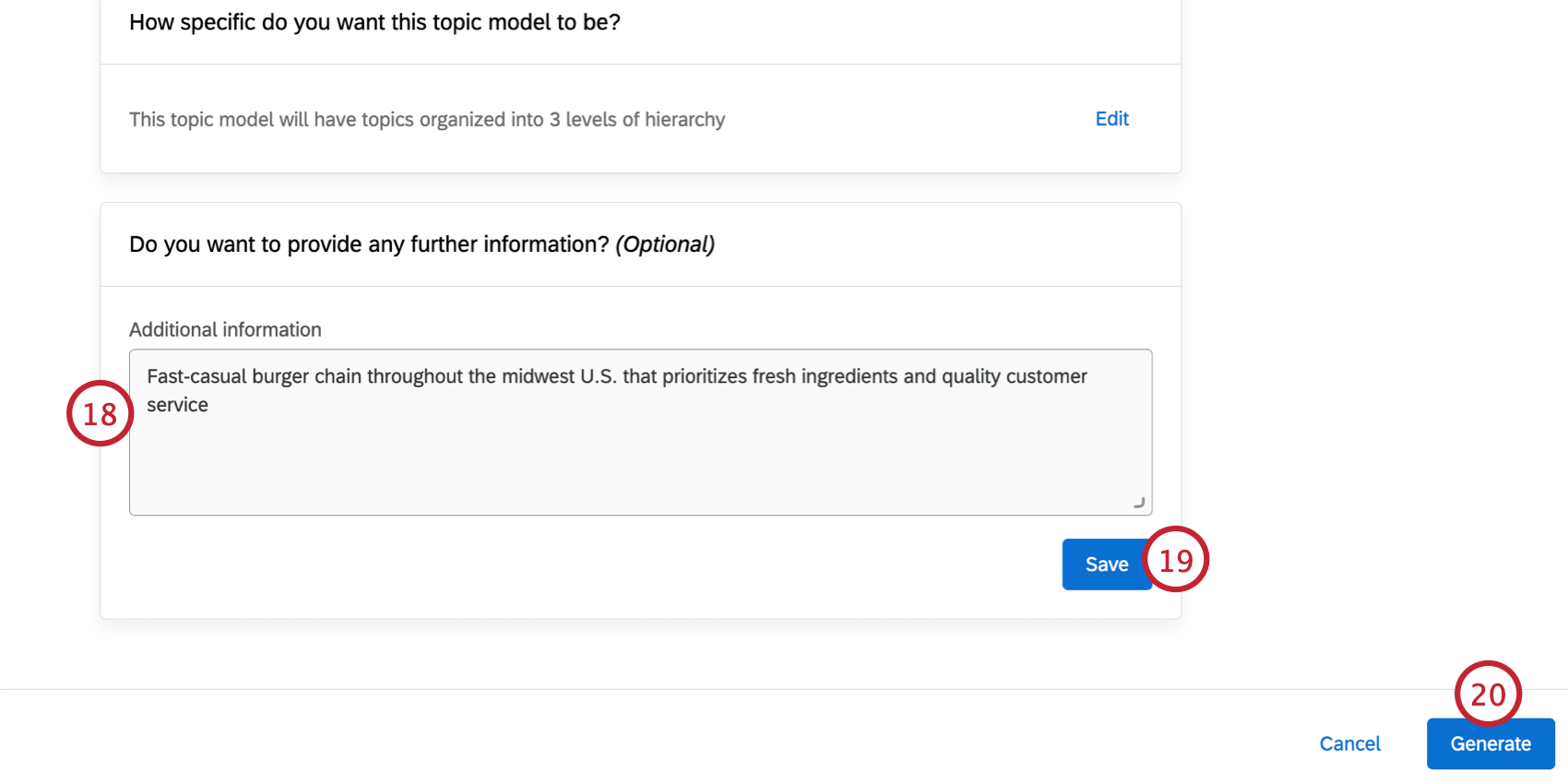
Qtip: If needed, you can click Edit to change any part of the model parameters before generating the text hierarchy. You cannot edit these parameters after your hierarchy is generated.
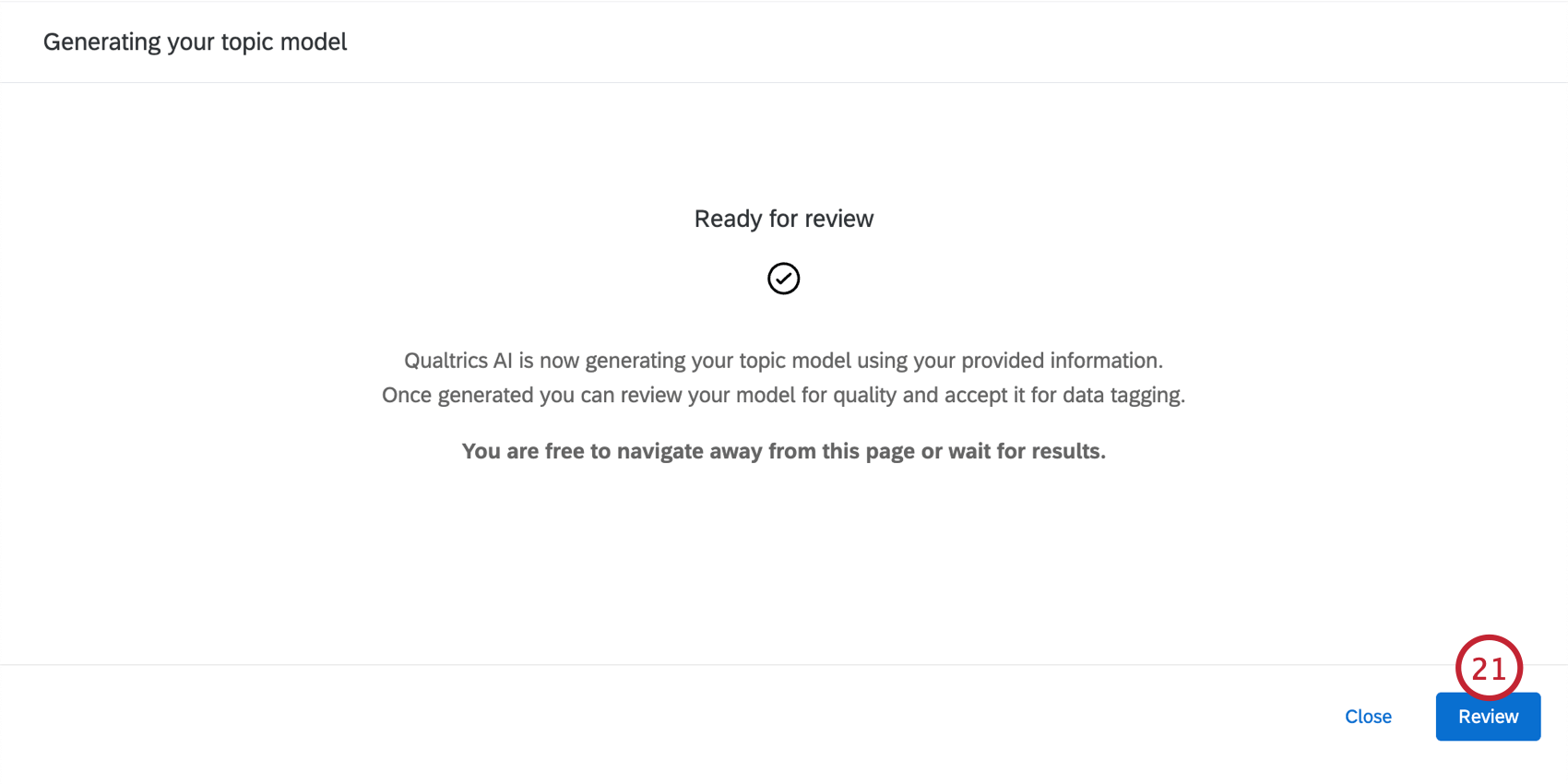
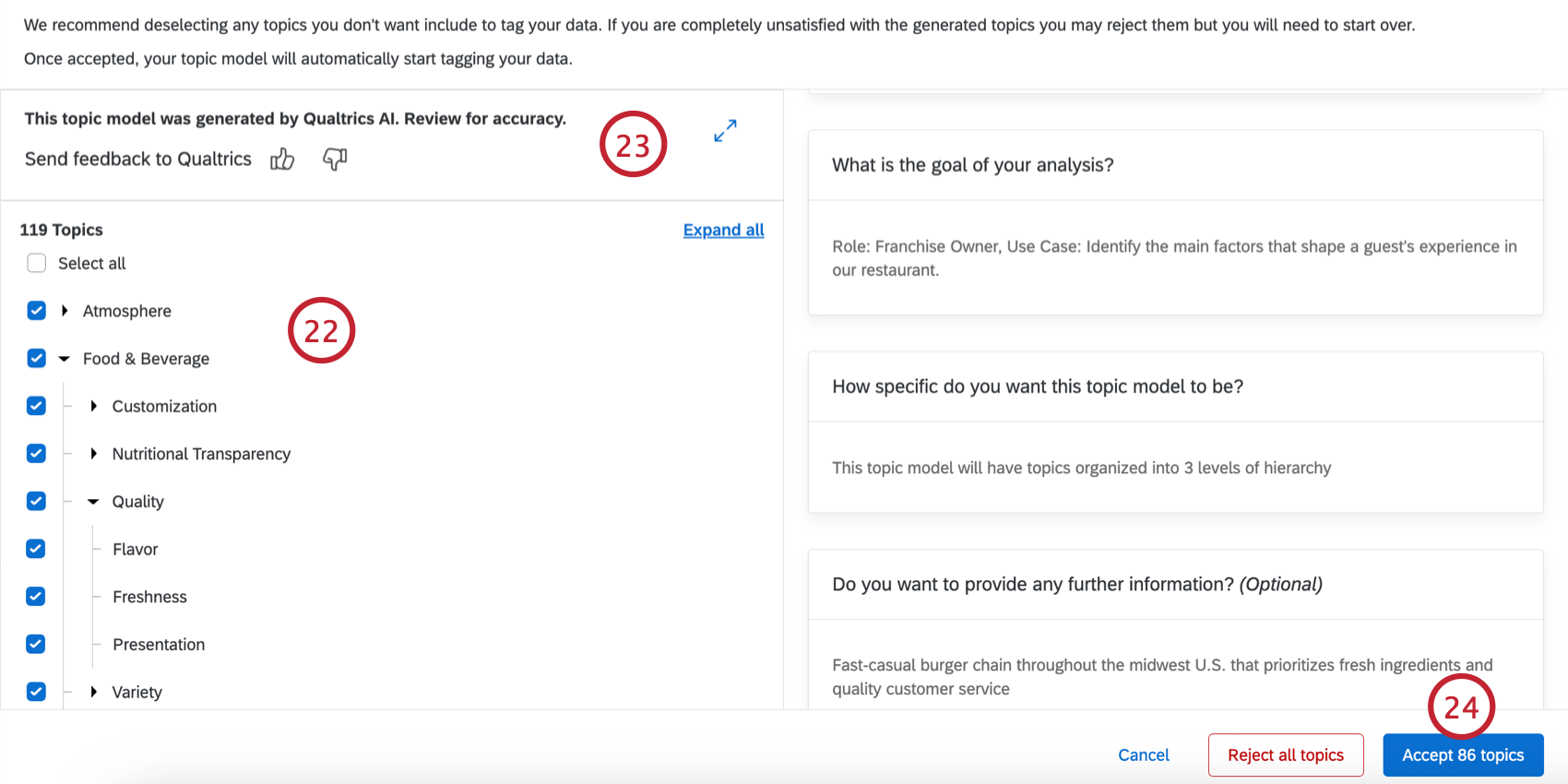
Qtip: You can repeat these steps while modifying the inputs to generate a new model (for example, to create a model tailored to a certain role at your organization).
Importing a Topic Model
Follow the steps in this section to import a topic model from a JSON file. Typically, this file is exported from an existing Text iQ dataset.
Qtip: This option is only available for Qualtrics Platform data sources.
Qtip: See Requirements for information about what data is eligible to be selected here.
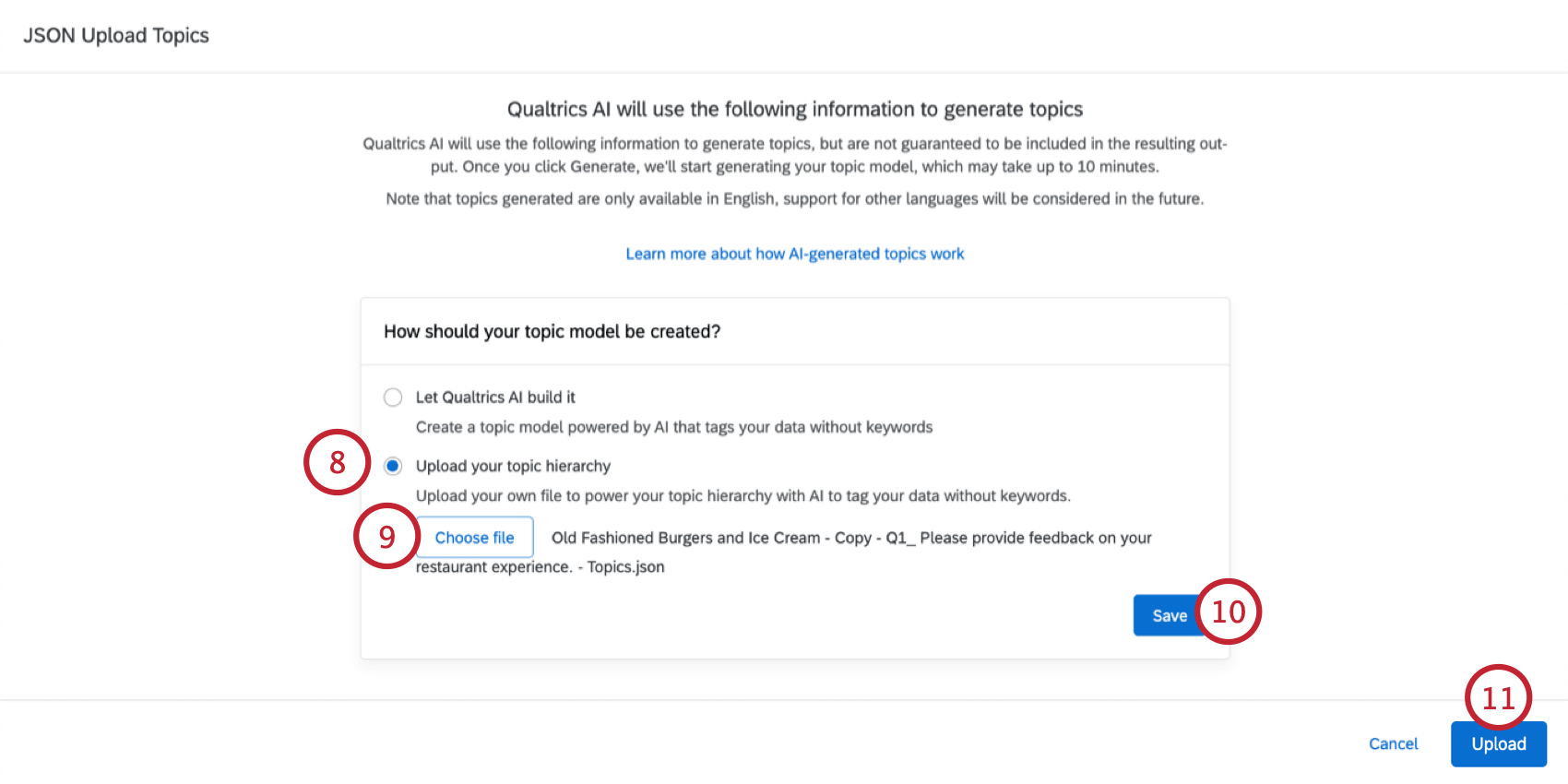
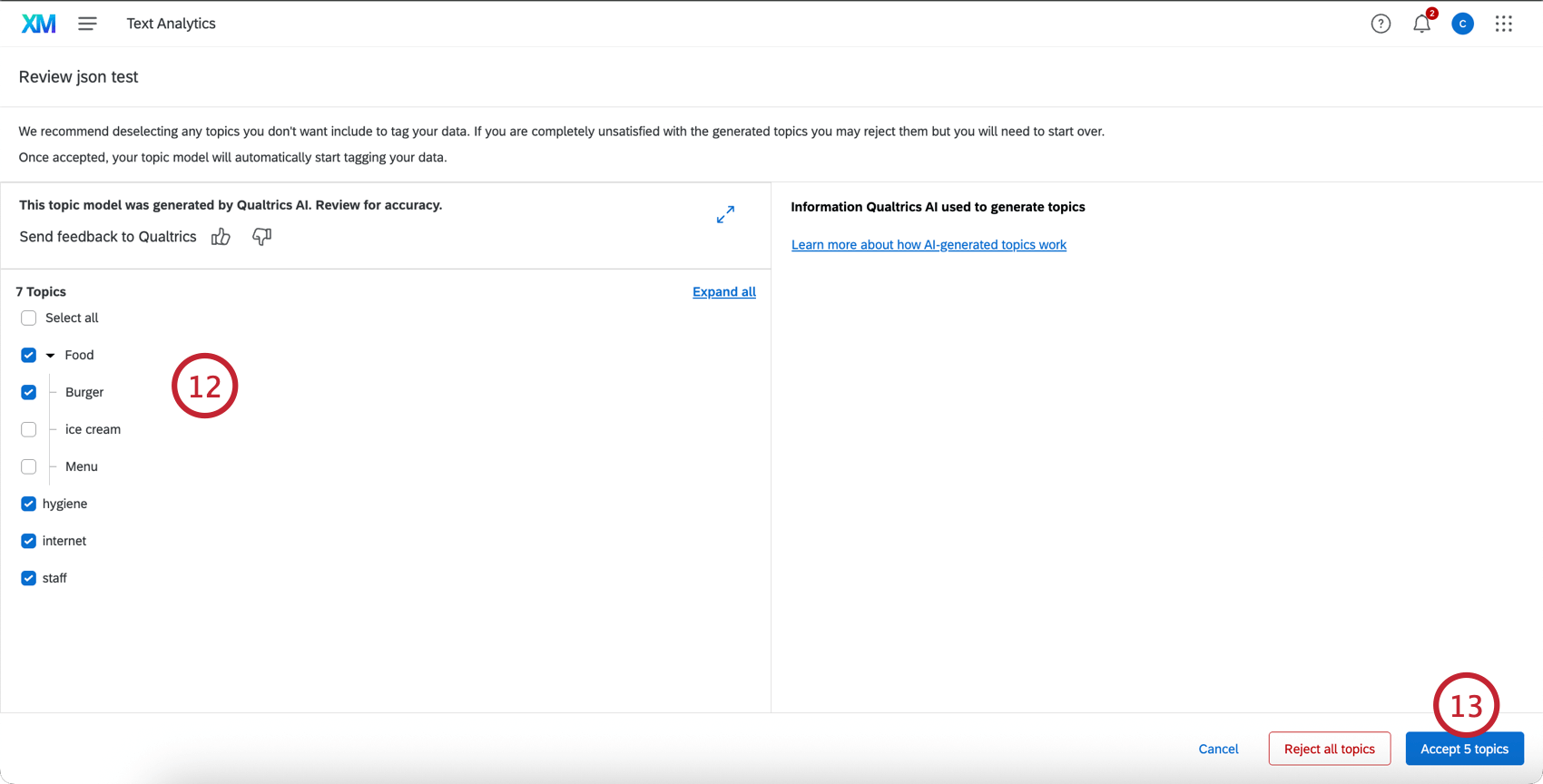
Recommended Topics
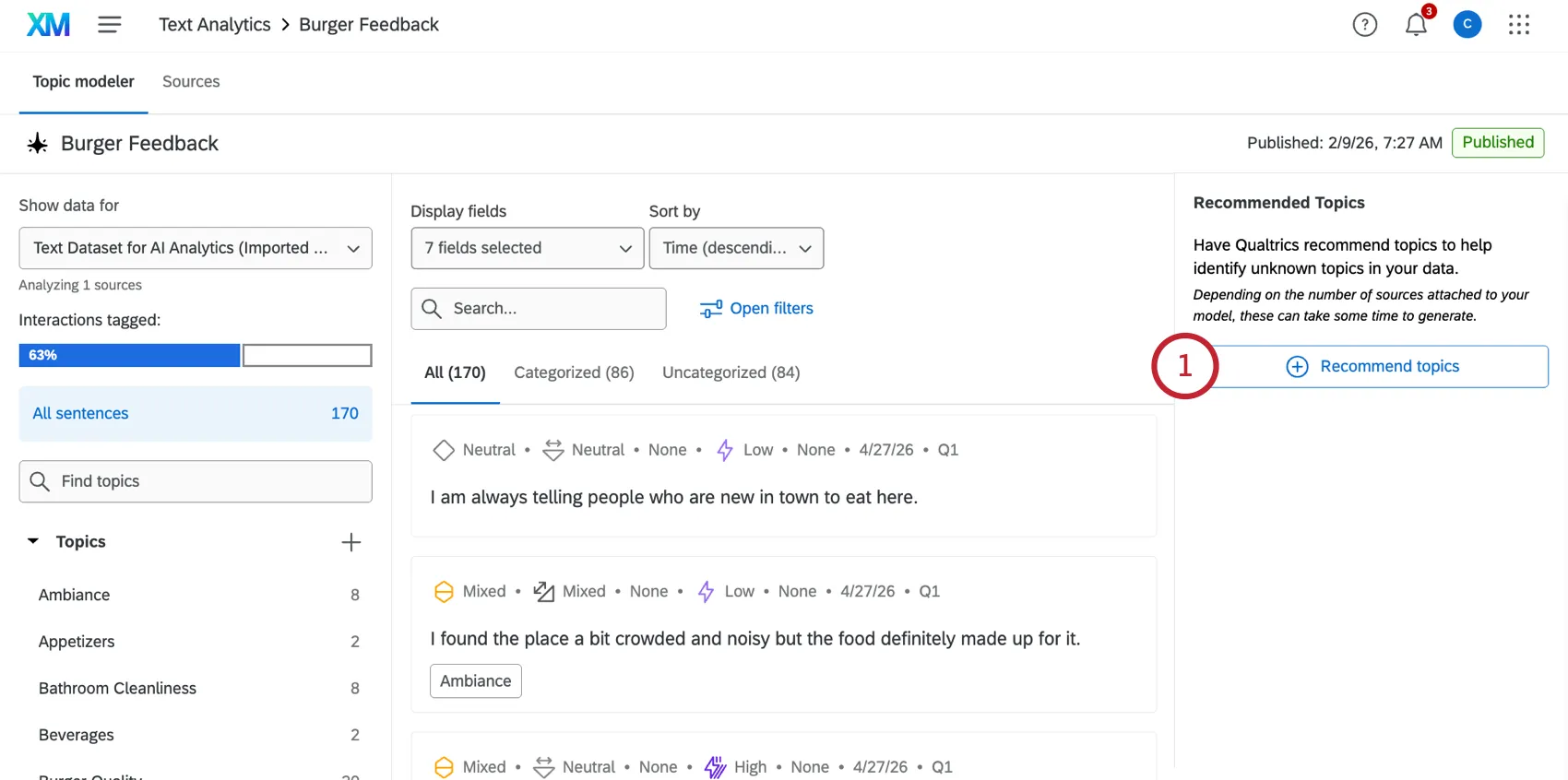
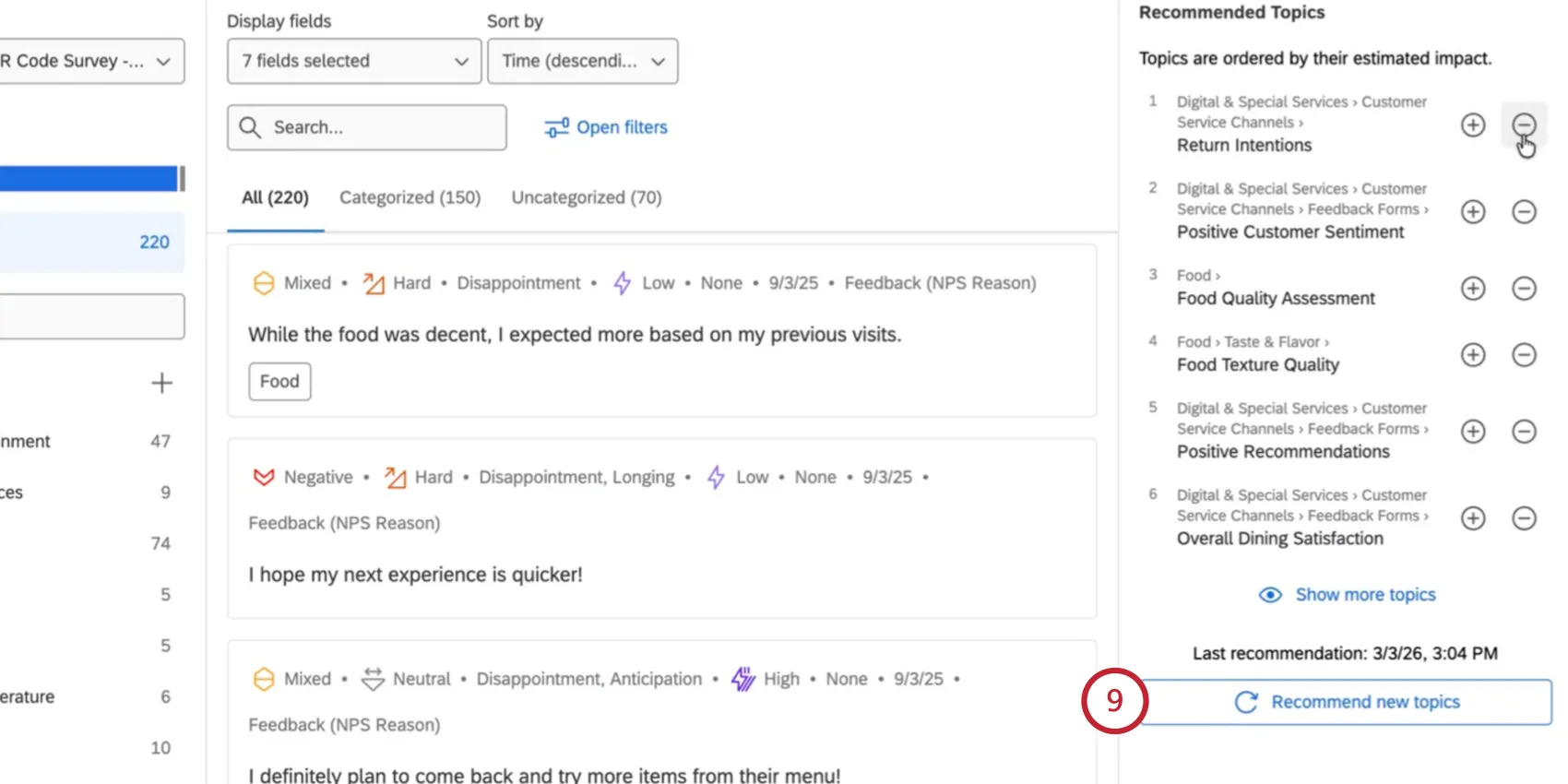
After creating your initial hierarchy, you may notice uncategorized sentences in your dataset as you continue to collect responses. Recommended topics can help you identify the gaps in your topic hierarchy and add new topics to the hierarchy so you can start tracking them.
Click Recommend topics.
Review the list of topics after they are generated.
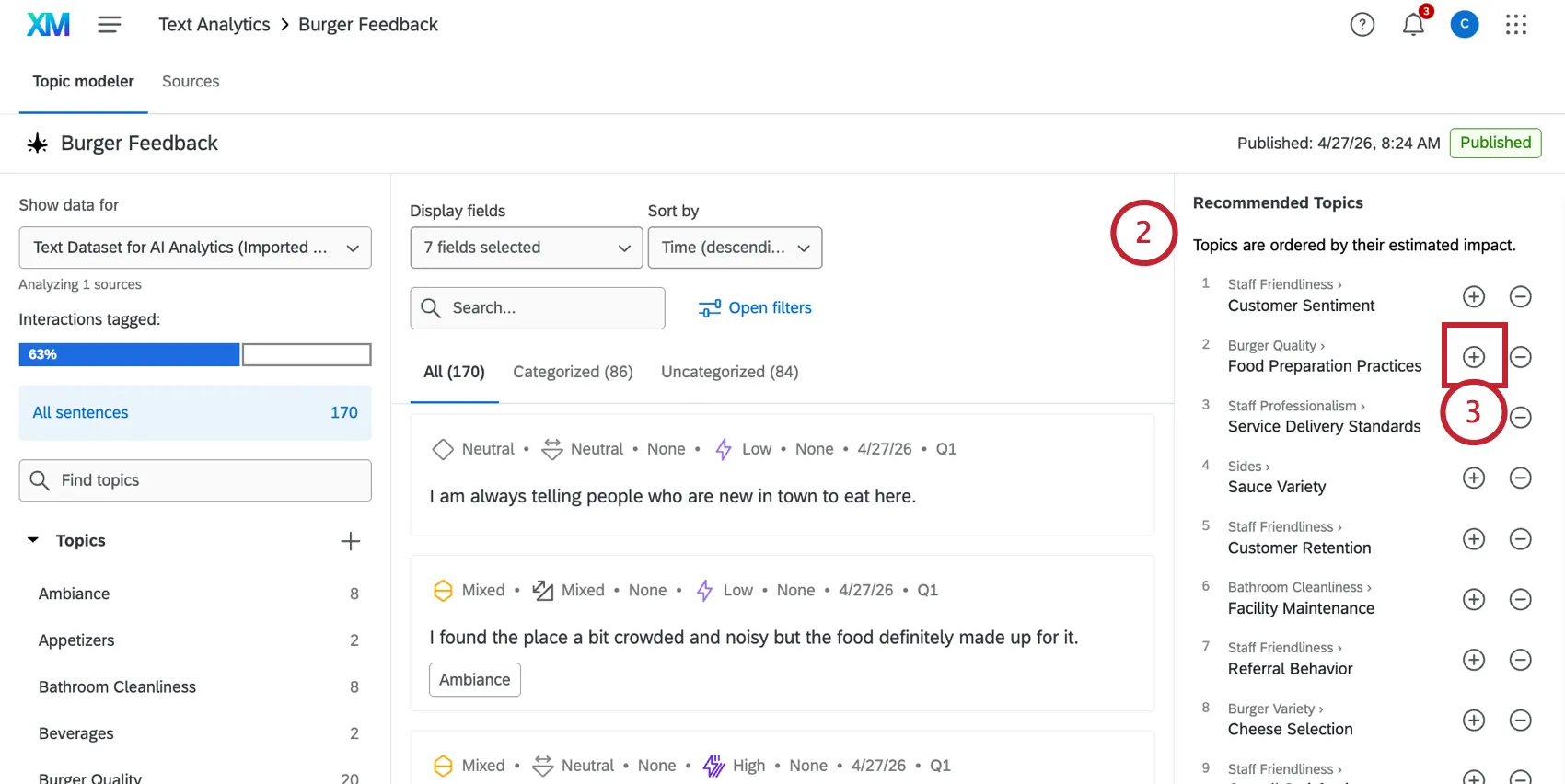
- Click the plus sign ( + ) next to a topic that you’d like to add to your hierarchy.
Review where the topic will be placed in your hierarchy. You can always edit its location later, if needed.
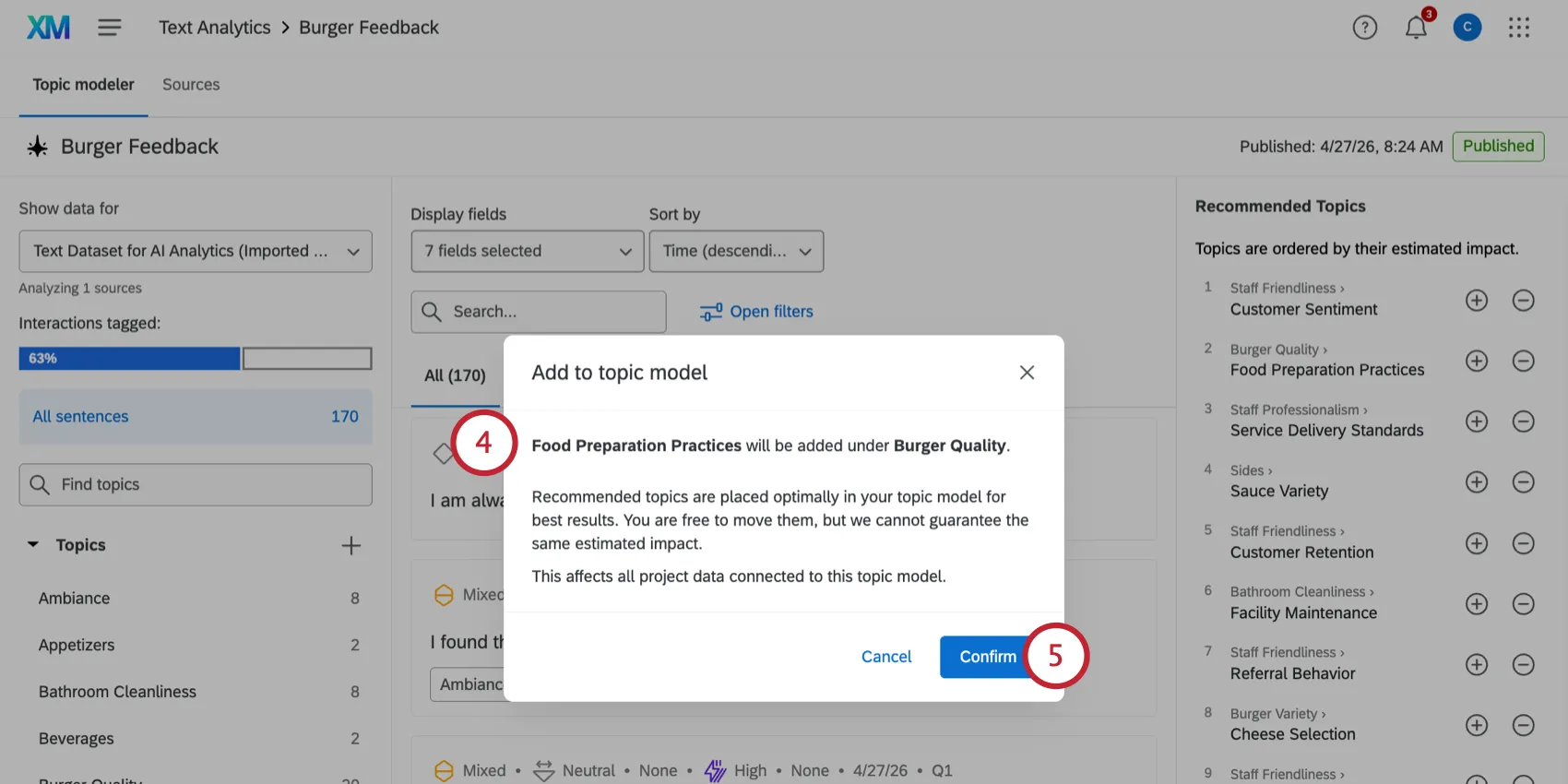
- Click Confirm.
You can review additional topics by clicking Show more topics.
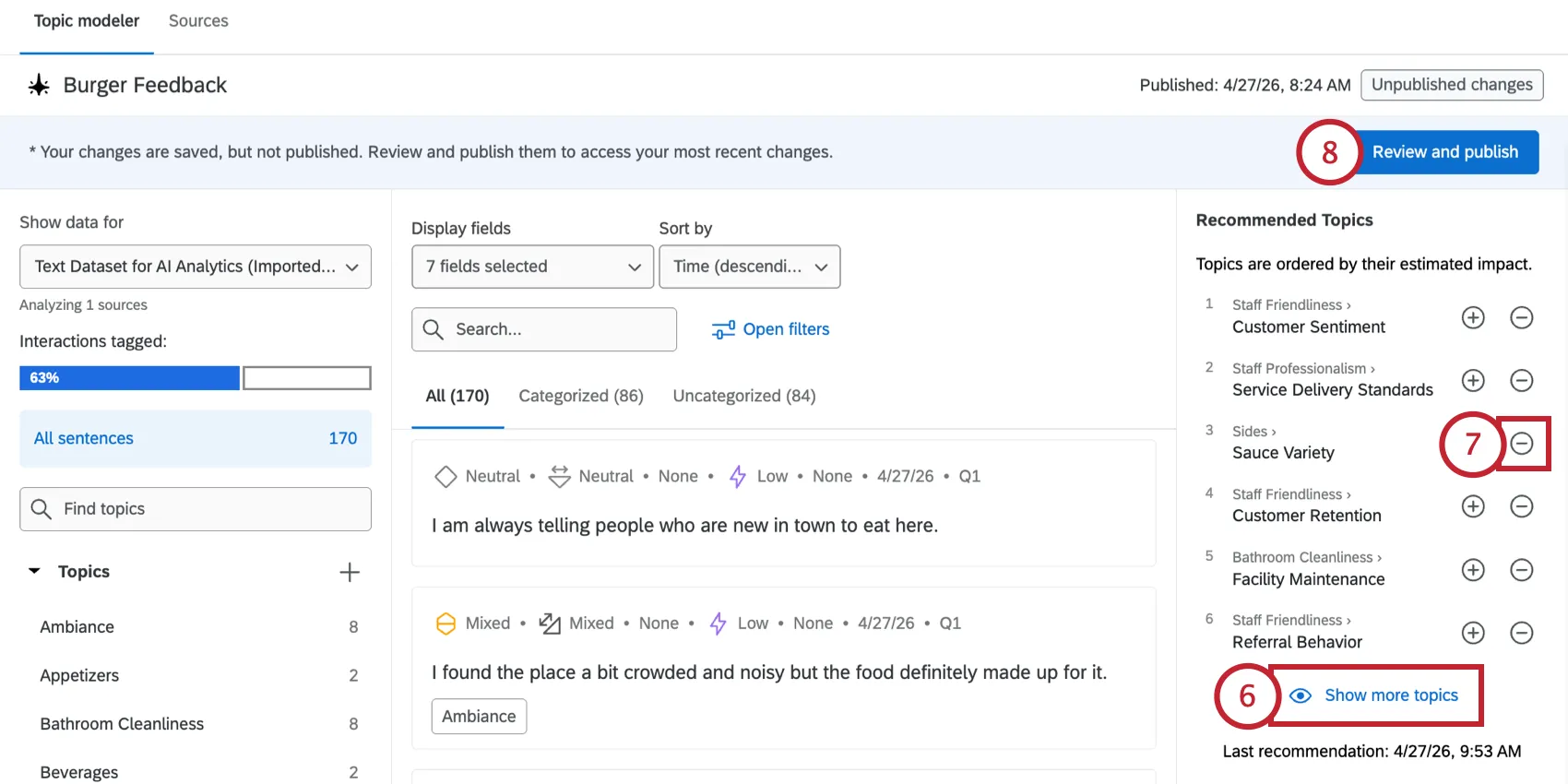
- To remove a topic from your recommendations, click the minus sign ( - ) next to it.
- Click Review and publish to save your changes.
You can generate more recommended topics by clicking the Recommend new topics button. This button only appears at least 4 days after you generated your last set of recommended topics.
Using an Automated Topic Model
Qtip: Automated Text Analytics comes with support from a Qualtrics representative, such as an Implementation Consultant or a Technical Success Manager. This representative will take care of implementing Text Analytics into a dashboard data setup.
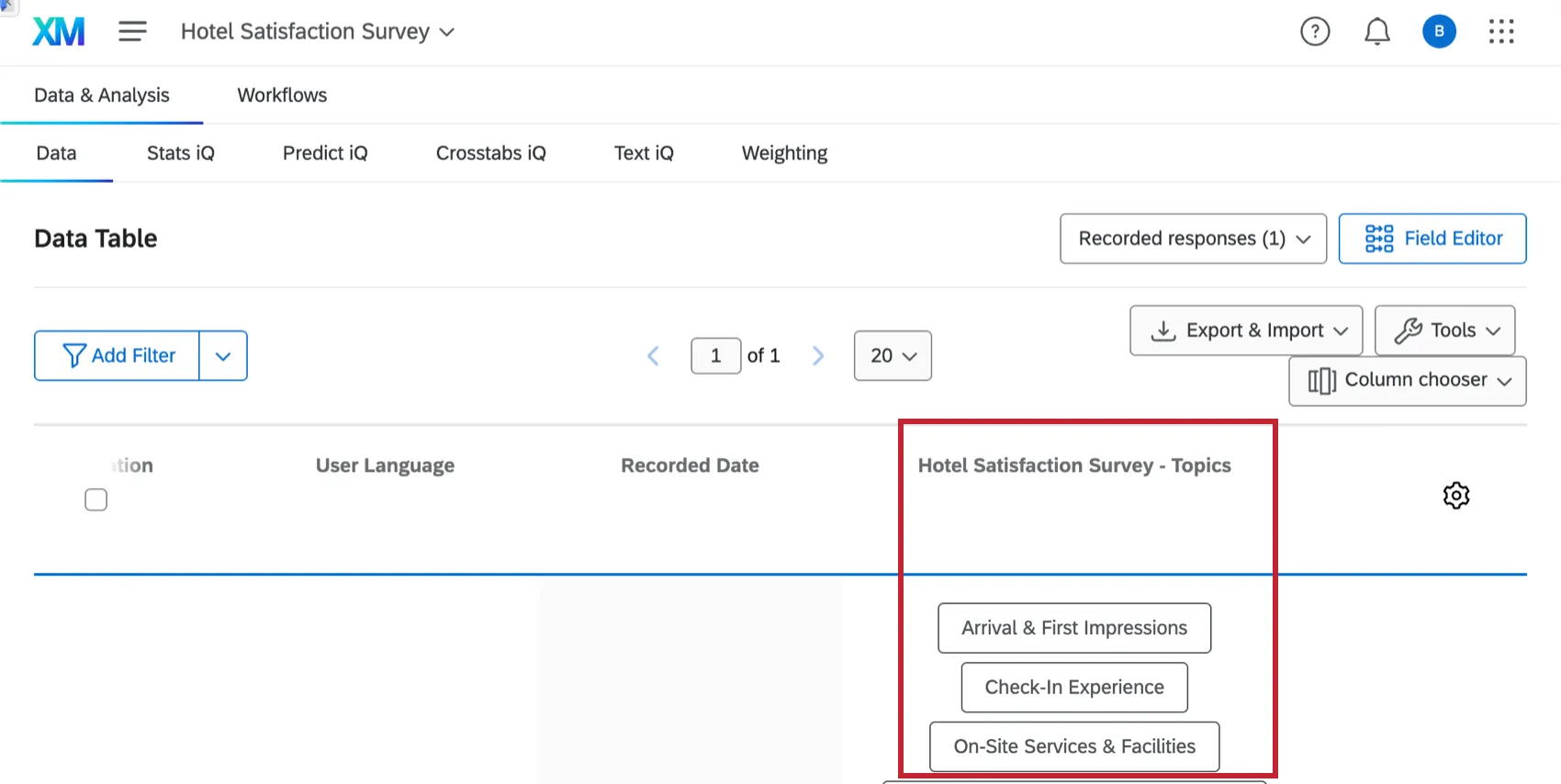
After creating an automated topic model, the generated topics will be tagged to the data source(s) used for the model. You will be able to see these topics in the Data & Analysis tab of your project, much like any other text topic fields.
Your automated topic model will also create a “Granular Text Analytics” data source that has the structure of all sentences from source interactions. For each sentence, there will be associated topics, sentiment, effort, emotion, emotional intensity, and actionability fields. This data source is available in the CX dashboard data modeler.
Using Automated Topics Models in a Dashboard
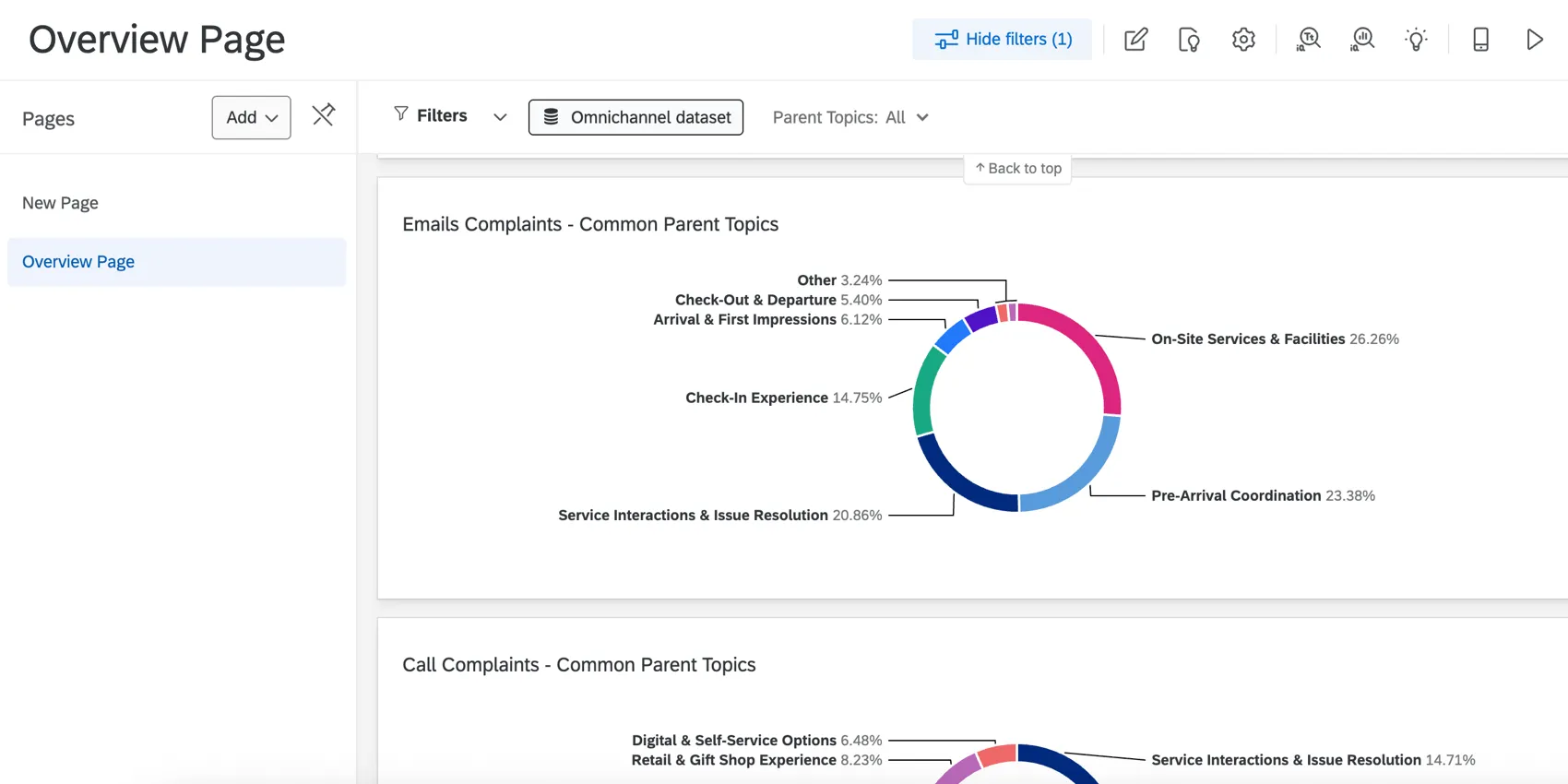
After you have your new source containing text enrichments, you can display it in a CX dashboard. Currently, this is managed by your Qualtrics team. Your new source containing text enrichments will be joined with your original interaction data, and linked dashboard fields are used to link the same field across interaction and derived datasets. Once your dashboard’s data is set up, you can choose which datasets(s) you want to use on an individual widget and filter basis.
Attention: Dashboards with sources containing text enrichments cannot be copied.

Using Automated Topic Models in Workflows
Once they are created, topic models can be used within workflow conditions. For example, you can create a workflow and determine if it should be triggered based on the presence of a certain topic(s) across an interaction.
When you are creating your workflow condition, select AI topics from the dropdown and build a condition based on a specific topic or topics.
Attention: Using AI Topic Models in workflows is only available when your workflow contains a Survey Response Event or Data Set Record Event.
Available Enrichments for Automated Text Analytics
After generating a model, your text responses will be automatically tagged with enrichments that indicate various properties about the response (such as effort, sentiment, emotion, and more). Below are all available enrichments and their meanings:
- Actionability: This enrichment categorizes statements that call for a response or action. Possible values include:
- Request: Contains an implicit or explicit request for information or action.
- Cry for Help: Requests help or assistance.
- Churn: Indicates a threat of losing clients.
- Cancellation: Indicates a threat or intention to cancel membership, service, or transactions.
- Suggestion: Contains an implicit or explicit suggestion for change.
- Missed Commitment: A promise, product, or service was not delivered.
- Consequence: An event resulting from something else (e.g., a cancelled delivery).
- Emotions: This enrichment labels the feeling expressed in respondent feedback.
- Possible values include: Anger, Boredom, Confusion, Disappointment, Disgust, Doubt, Embarrassment, Fear, Frustration, Helplessness, Sadness, Longing, Surprise, Amusement, Anticipation, Happiness, Love, Pride, Relief, Thankfulness, and Trust.
- Emotional Intensity: This enrichment indicates the strength of the expressed emotion and is only present when emotion is detected.
- Possible values include “High” and “Low.”
- Sentiment: This enrichment indicates the overall sentiment, from very negative to very positive. The “Very Negative” and “Very Positive” sentiment labels indicate the strongest sentiment, helping you to focus on the most critical feedback in each comment. “Neutral” sentiment does not show strong emotion in either direction. “Mixed” sentiment suggests there is a mixture of positive and negative sentiment in the same statement. Sentiment labels have the following numeric scores:
- Very Negative recodes to -2
- Negative recodes to -1
- Mixed recodes to 0
- Neutral recodes to 0
- Positive recodes to 1
- Very Positive recodes to 2
- Effort: This enrichment measures the effort it took a person to complete a task and can help you identify products and services that cause pain or delight. Effort labels have the following numeric scores:
- Very Easy recodes to 2
- Easy recodes to 1
- Mixed recodes to 0
- Neutral recodes to 0
- Hard recodes to 1-
- Very Hard recodes to -2
That's great! Thank you for your feedback!
Thank you for your feedback!