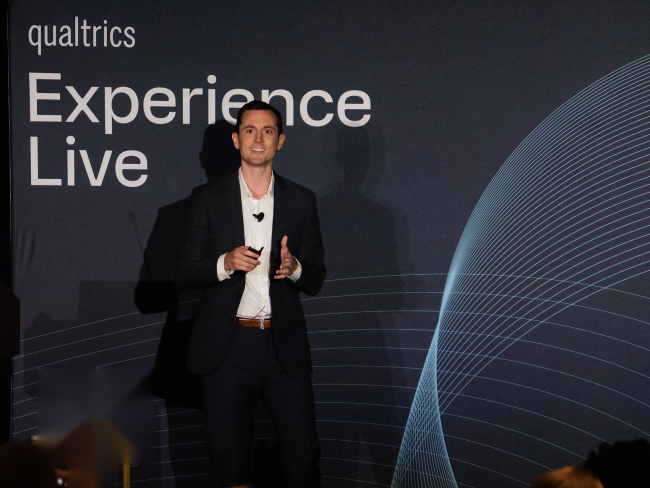


Washington State had a problem most governments know well. Residents who needed help had to navigate dozens of separate agencies, each with its own rules, its own systems, and its own way of doing things.
Bill Kehoe, State CIO for Washington Technology Solutions, and Jesse Jones, Director of Your Washington, knew there was a better way. One front door, one identity, one experience built around the people it serves. But how do you get more than 80 government agency partners to back a single-entry experience?
What separate agency experiences actually cost
Washington has more than 80 agencies, each with its own website, identity system, and customer experience. Each time a resident had an issue, they had to guess which agency to contact, re-enter their data at every step, and navigate a legacy authentication platform with hundreds of applications behind it.
The complexity showed up in the numbers. Over 40% of customer inquiries were "Can someone help me through this process?" and 39% were "How long will it take?" Residents just wanted to know their paperwork was received and what happened next. "If you can follow a pizza," Jones said, "why can't you follow my case?"
Employees were asking the same kinds of questions. They wanted systems that actually worked, processes that did not require workarounds, and enough breathing room to do their jobs without burning out.
When residents cannot get through and employees cannot keep up, the demand on the system compounds. Residents cannot access the services they need, trust erodes, and the people trying to help them run out of room to do it.
A connected government initiative
Washington State’s answer to improving service delivery has three layers: an executive mandate, a technology vision, and a change management strategy.
The mandate: In 2025, Governor Ferguson signed an executive order (EO) making customer experience a core function of state government. Every agency, board, and commission had to designate a customer experience liaison. Quarterly reports were required. Measurement, improvement, and accountability were built into the directive, along with commitments to trust, equity, plain language, and accessibility.
If people don't know what to do," Jones said, "they can look at the EO and start moving in that direction.
The technology vision: Kehoe arrived at WaTech in 2021 with a concept for a single resident portal, log in once, see personalized services, and navigate government without needing to understand the org chart behind it. That expanded into a full digital experience program, the wa.gov portal, a unified login system, and the migration away from legacy infrastructure.
With a shared front door, every interaction carries what came before. Instead of re-entering information at every step, the system has the context to guide people to what they’re looking for, faster.
Now, a resident who applies for unemployment benefits can be surfaced for childcare assistance and health coverage they're eligible for without completing three separate applications across three separate agencies.
By shipping value in phases, Washington is able to deploy incrementally, proving impact and building credibility through results sooner rather than promises of "later." "The longer the project, the more risk that it's never going to happen," Kehoe said.
The change management: The hardest part is convincing 80 agencies that a connected approach serves their residents better than going it alone. Each agency now submits a plan identifying what they'll improve, how, and on what timeline.
Jones's team at Your Washington clusters agencies around common themes and gets them in a room together to solve problems collectively. "The answer is in the room," Jones said. "I'm asking some of the real smart people in state government to step up and help."
Jones sets the direction for the experience. Kehoe's team builds the systems that enable it.
Washington State’s customer experience movement
"We're not thinking about replacing legacy systems," Kehoe said. "Modernization starts with the customer experience and works backwards."
That reframe changes what success looks like. A legacy replacement project is measured by whether the new system works. A modernization effort rooted in experience is measured by whether residents get the services they need and the system gets smarter with every interaction rather than resetting to zero each time.
"This becomes a movement, not a project," Kehoe said. "A customer experience movement."