

A wave of mandates between 2021 and 2026 has codified customer experience as a legal and operational requirement across federal and state government. A core function agencies are now accountable for delivering. The pressure is coming from every level at once: federal law and a surge of state executive orders across Pennsylvania, Washington, New York, Utah, and Missouri.
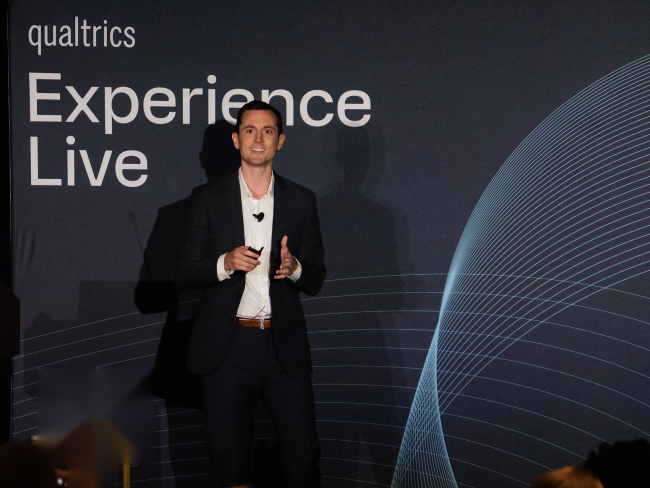
This article is based on the X4® 2026 session “Meeting customer experience mandates across all levels of government,” you can download the full presentation here.
Customer experience is now a government requirement
The core mandate is straightforward: transition government toward creating intuitive services that reduce the time tax on the public. Appoint accountable customer experience leaders. Measure what matters.
- At the federal level, the 21st Century Integrated Digital Experience Act (2018) laid the foundation, requiring agencies to modernize websites, digitize services, and adopt accessible, mobile-friendly digital interfaces.
- Building on that, Executive Order 14058 mandated “simple, seamless, and secure” digital interactions to rebuild public trust, and remains in effect under the current administration.
- Public Law 118-231 went further, requiring each agency to designate a Senior Lead Agency Service Delivery Official and standardizing government-wide service delivery metrics.
- Executive Order 14338 added a design layer, creating the National Design Studio and the position of Chief Design Officer.
States are moving on their own.
- Washington established the “Your Washington” office and requires every agency to develop a Customer Experience Improvement Plan by December 2026.
- Pennsylvania created the Commonwealth Office of Digital Experience and is replacing agency-specific logins with a single Keystone Login.
- New York named the first Chief Customer Experience Officer in the United States and released the NYX Strategy, a concrete roadmap for all state agencies.
- Utah requires improvement projects from every division with results published to a public dashboard.
- Missouri’s EO 26-03 requires cabinet officials to spend at least eight hours monthly meeting with stakeholders.
The five shifts every agency needs to prepare for
Taken together, the mandates are pointing in one direction: a shift from government-centric services to human-centered ones. Five trends show where this is heading.
Proactive and personalized service
Mandates pushing toward data integration and customer-centered design are building the foundation for governments to anticipate customer needs rather than wait for requests.
Seamless omnichannel access
Single login initiatives in Washington and Pennsylvania reflect a broader mandate direction: a unified, “one-government” approach across web, mobile, and in-person channels that eliminates the need for residents to navigate complex, siloed agency structures.
AI and automation
Several mandates reference AI-readiness as part of modernization. Routine tasks handled around the clock through automation allow agencies to redirect staff toward higher-value interactions.
Data-driven trust
Reducing the time tax on customers while maintaining privacy and security is a requirement across jurisdictions. Agencies that use data integration effectively are better positioned to deliver on this.
Human-centered design
Policies and services built from direct user feedback and journey mapping are a compliance requirement in a growing number of jurisdictions. The mandate language is clear: understand how customers experience government and use that understanding to improve it.
The capabilities that make it possible
The first question most agencies ask is: where do we start? Three capability areas connect directly to where the mandates are pointing and where Qualtrics supports agencies in getting there.
Quickly establish measurement programs
Agencies need feedback tied to specific interactions, pages, and services. Pre-built solutions designed for government, including the Government Web Experience solution, accelerate this, giving agencies the signal they need to report against requirements and identify where service delivery is breaking down.
Beyond survey-based measurement, digital experience analytics (DXA) capture behavioral signals that do not require a survey at all, including funnel conversion rates, frustration indicators, and session data. This gives agencies a fuller picture of how residents actually experience their services.
Accelerate research and design activities
Prototype testing, card sorting, tree testing, and qualitative user research are how agencies validate solutions and proactively identify what needs to change. Building them into the improvement cycle is how mandate requirements become better customer experiences.
Aggregate performance metrics
Consolidated customer experience metrics across agencies and services give leadership what they need to understand the full picture, report against mandates, and prioritize where to act next. Qualtrics surfaces this through a consolidated dashboard with key performance indicators across agencies and services–exportable on demand, or automated to deliver scheduled email reports to the right stakeholders, with data widgets embedded directly in the email or as an attached report file.
The mandate landscape is still evolving and the standard will continue to rise at every level of government. The agencies building these capabilities now will be positioned to meet the next requirement.
To help meet our goal of universal design, we follow the internationally recognized best practices in Section 508 of the Rehabilitation Act and the Web Content Accessibility Guidelines (WCAG) 2.0 Level AA.