

Manage Users in EX Directory Task
What's on this page
Qtip: This support page describes functionality that we intend to release starting October 7, 2026. Qualtrics may, in its sole discretion and without liability, change the timing of any product feature rollout, change the functionality for any in preview or in development product feature, or choose not to release a product feature or functionality for any reason or for no reason.

About the Manage Users in EX Directory Task
The Manage Users in EX Directory task is used to manage people in the employee directory and in specific EX project participant lists. You can add new people, update existing people, or even delete specified people. This data loader task can process changes to a lot of records at one time, helping you keep your employee directory and your projects up-to-date on a regular basis. To use this task, you must first extract data from another source using a data extractor task.
Qtip: For information on general limits that apply to ETL workflows, see Workflow Limits. For any task-specific limits, refer to the information on this page.
Attention: You must be a Brand Administrator to use this workflow task. Make sure you have the Manage Participants permission enabled.

Setting up a Manage Users in EX Directory Task
Select Data source (ETL extractor). In this step, you’ll extract data that you can load to another destination. See using Building ETL Workflows for more information.
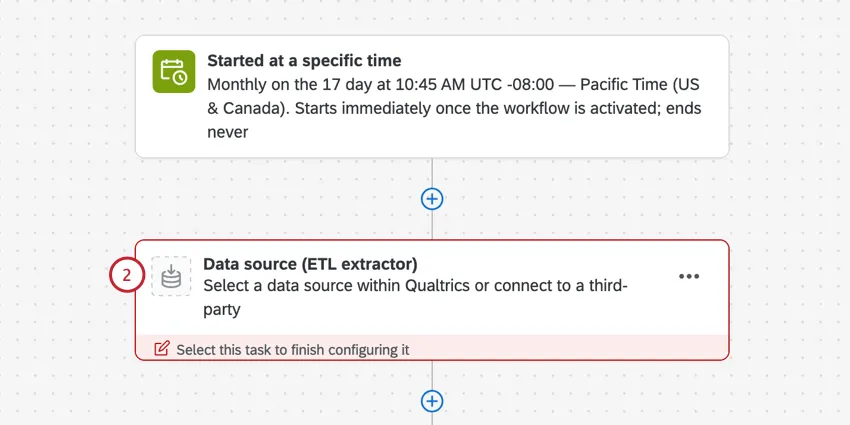
Qtip: Usually, this is the extract data from SuccessFactors task, but can be any data extractor task.
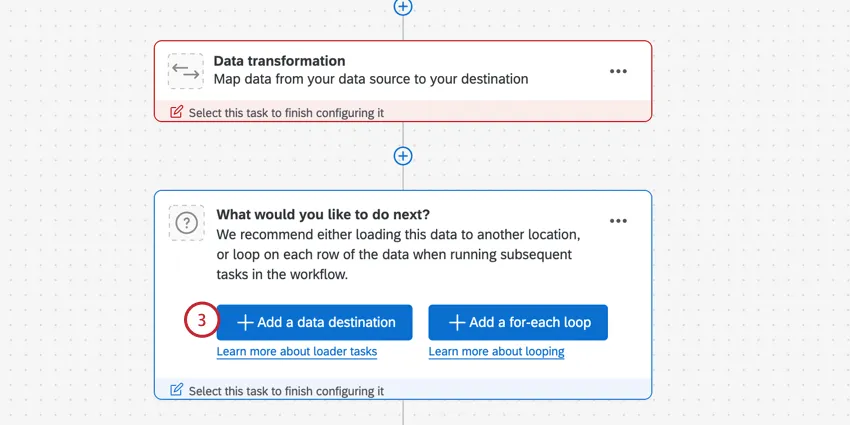
Click Add a data destination.
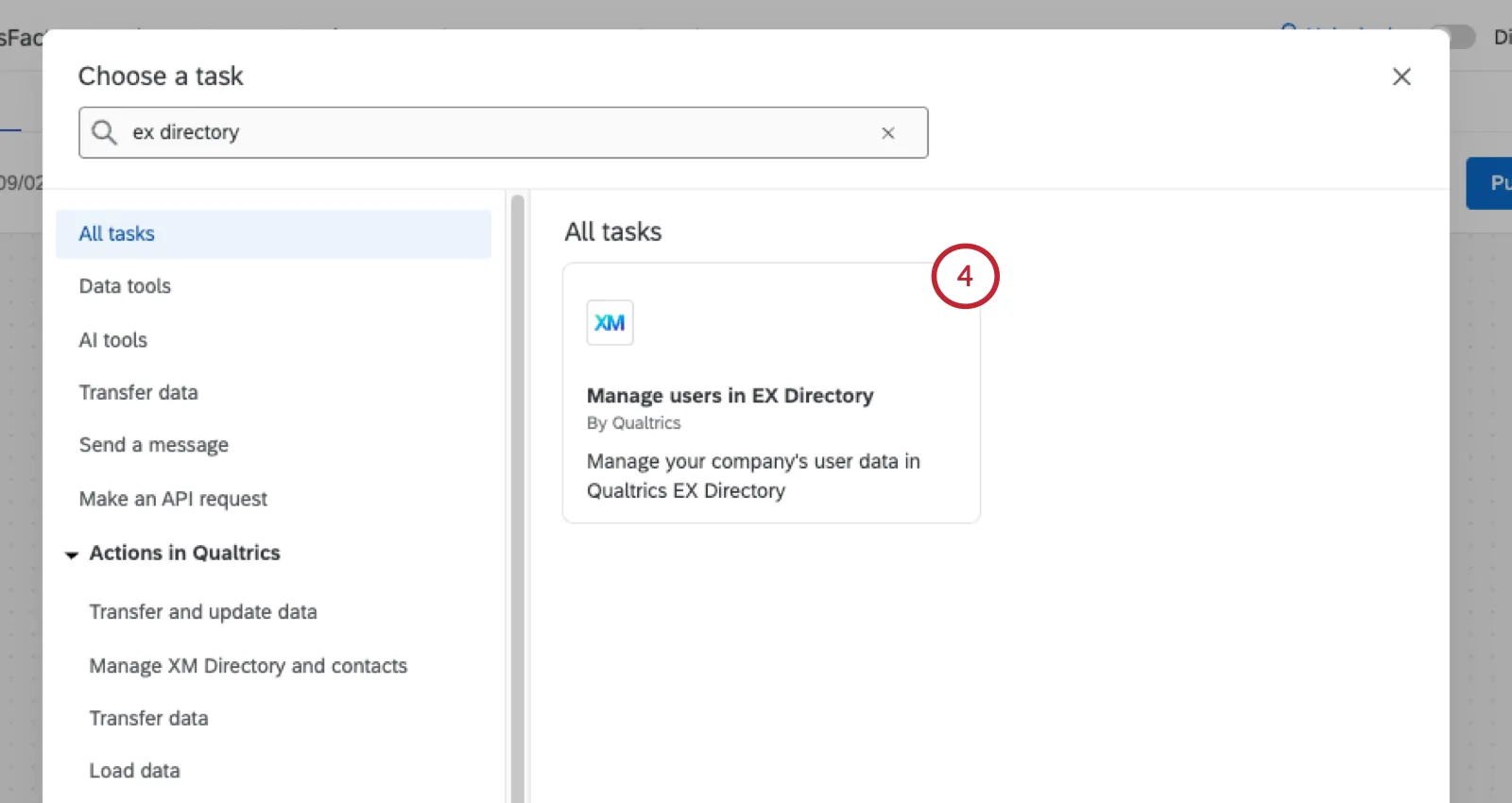
Choose the Manage Users in EX Directory task.
Choose between the following:
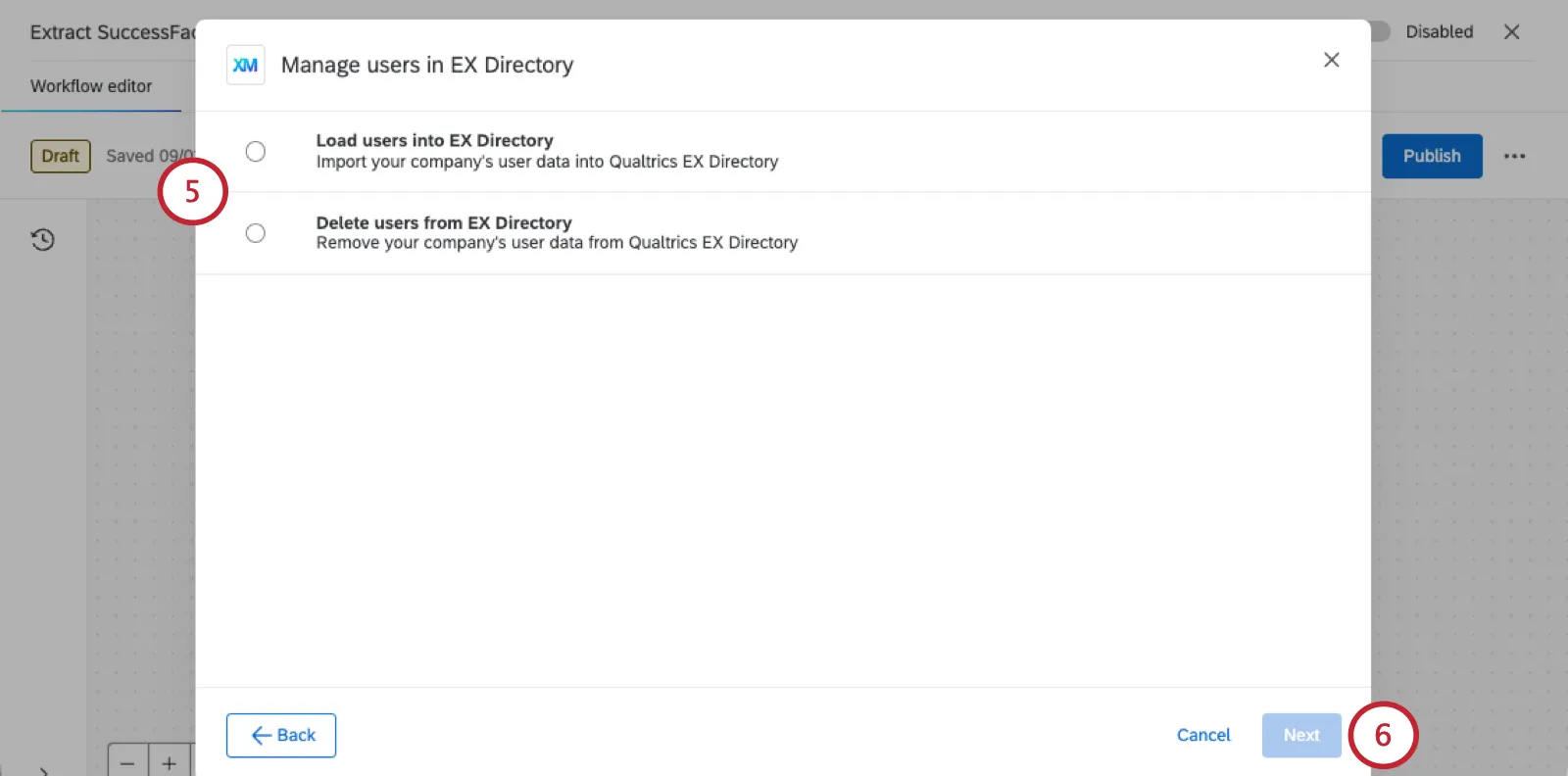
- Load users into EX directory: Import your company’s employee data into your Qualtrics employee directory. This option can be used to both update existing users with new metadata and to add entirely new users.
- Delete users from EX directory: Remove your company’s user data from your Qualtrics employee directory.
Click Next.
Depending on what you selected, the next steps vary. Click your chosen section for next steps.
Qtip: When this task runs successfully, you’ll see the message “There were no files available when this task was run,” in your workflow run history. This is because the processed data is based on the extractor task earlier in your workflow, not a separate file.
Load Users into EX Directory
Qtip: These steps assume you’ve followed the initial workflow setup described here and selected Load users into EX directory.
Select where you want to save the data. You can choose your global employee directory, or a specific EX project.
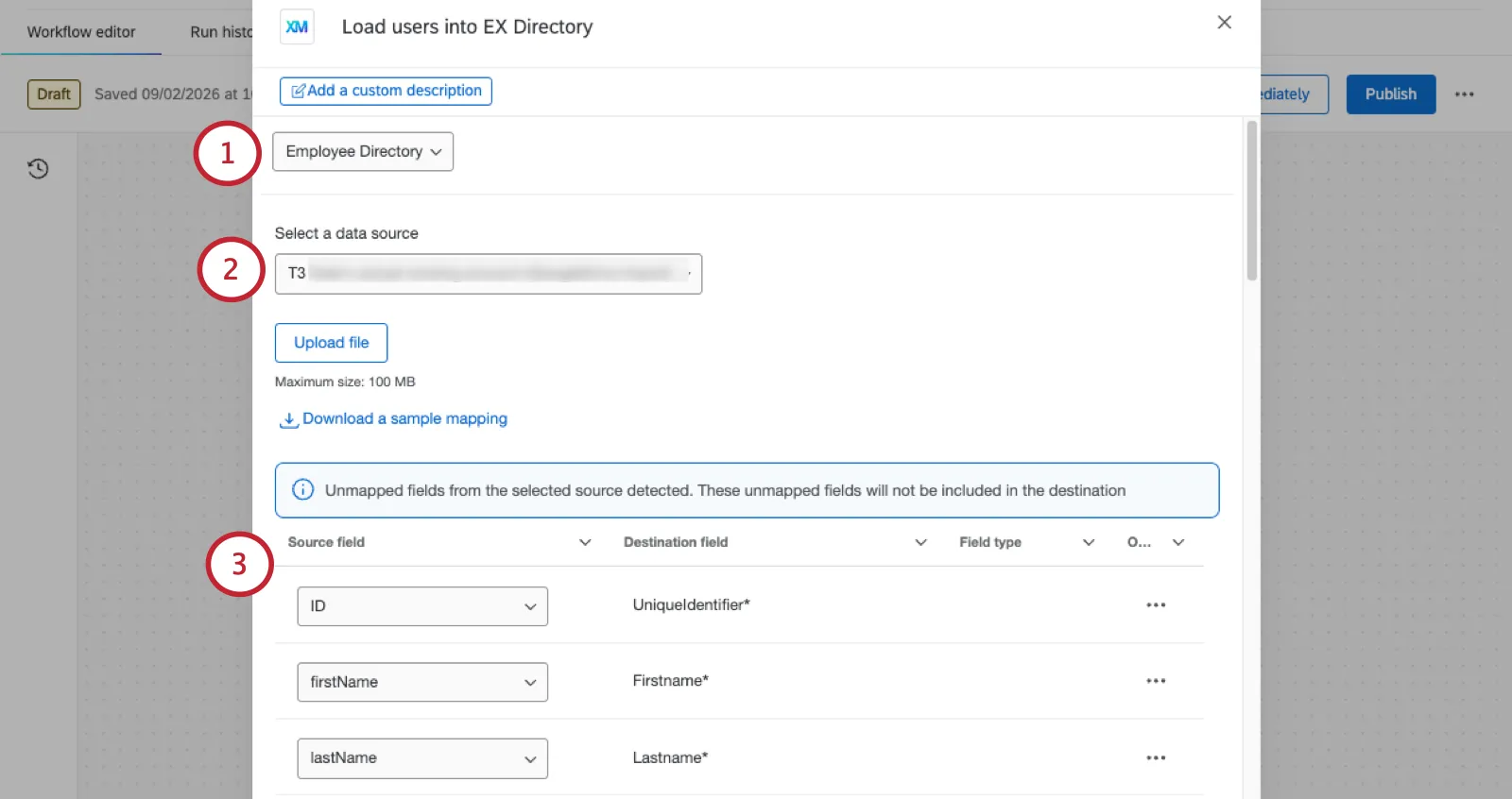
Qtip: When importing directly into a Lifecycle project, these participants ignore any participant import automation criteria.
Choose the task to import data from. This should be your data loader task.
Qtip: The maximum file size for the file in the data loader task is 1 GB.
Map your source fields from SuccessFactors to your destination fields in Qualtrics. The pre-loaded fields are required, and below is our suggested mapping:
| Source field | Destination field |
|---|---|
| /person/employment_information/user_id | UniqueIdentifier |
| /person/personal_information/first_name | Firstname |
| /person/personal_information/last_name | Lastname |
| /person/email_information/email_address |
To import additional metadata fields, click Add field.
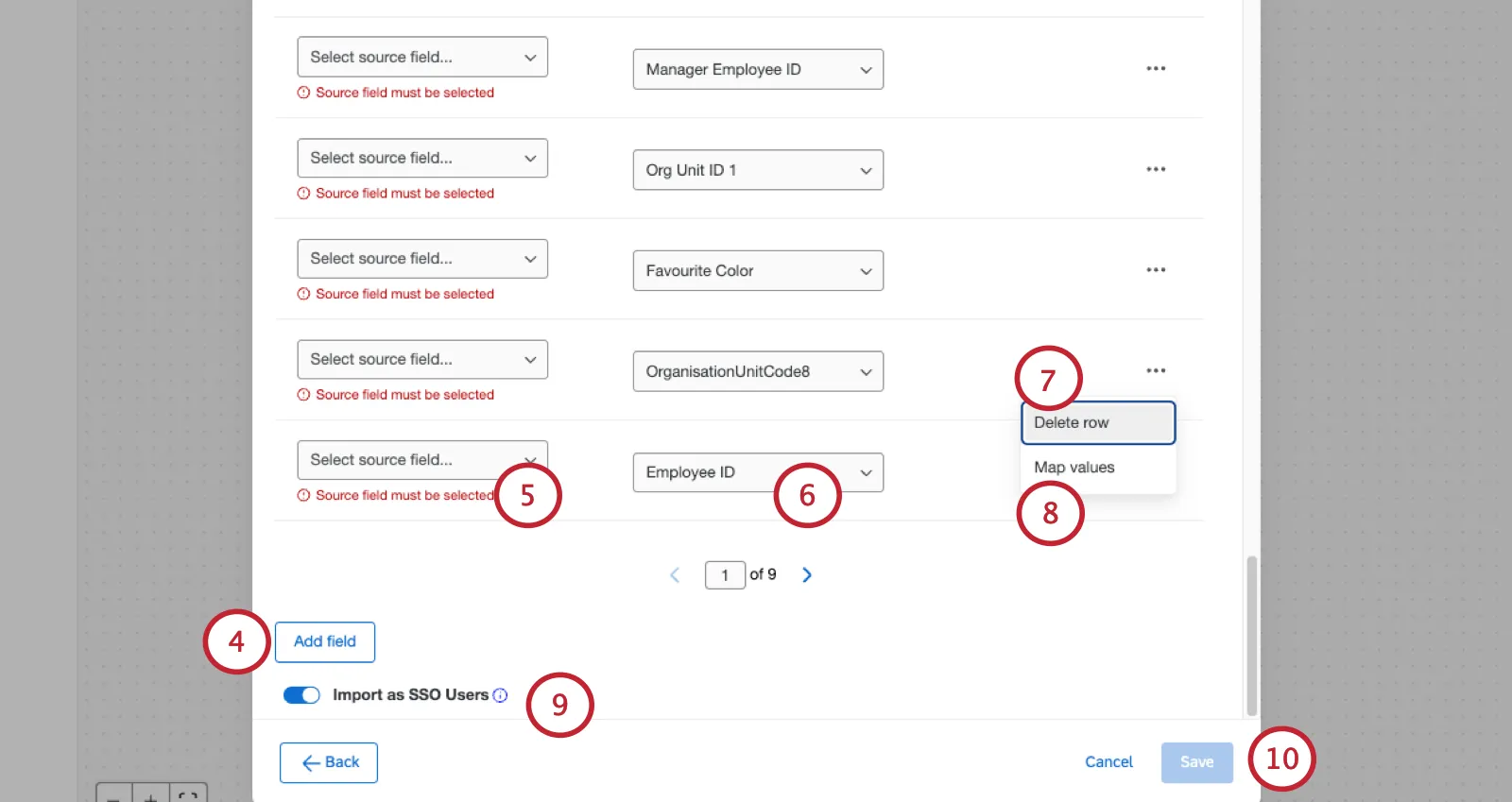
For your additional field, select the source field from SuccessFactors.
Use the menu to select a metadata field from your EX directory to save the data to. You also have the option to create a new metadata field instead.
To delete a field, click the 3 dots menu and select Delete row.
If needed, you can map specific values for your field by clicking the 3 dots menu. You can use this feature if you want to save your data with different values than they have in SuccessFactors.
Qtip: For more details, see Mapping Field Values for steps. While this link will take you to another task’s support page, the functionality is the same.
If your license uses SSO, you can enable or disable the Import as SSO Users option. When this option is enabled, any newly created participants will be added as an SSO user. Your organization ID will be automatically added to the end of their email address to create their SSO login username. When disabled, the new participants will be added as standard users who log in with a unique Qualtrics username and password.
Qtip: Person metadata can have multiple values. For example, To show Barnaby is assigned to multiple office locations, his Office field might be equal to Provo|Seattle. If you’re using this workflow to create SSO users, make sure you’re using one of the approved delimiters and adjust your organization settings accordingly. See Adding an SSO Connection for more details.
When finished mapping fields, click Save.
Delete Users from EX Directory
Qtip: These steps assume you’ve followed the initial workflow setup described here and selected Delete users from EX directory.
Attention: This workflow will automatically delete users and their data from your EX projects and directory based on the selected schedule, source data, and mapping criteria. If you want to preserve the response data in your EX projects, consider following options:
- Disable accounts instead of deleting them.
- Enable pseudoanonymization.
Select where you want to delete users from. You can choose your global employee directory, or a specific EX project.
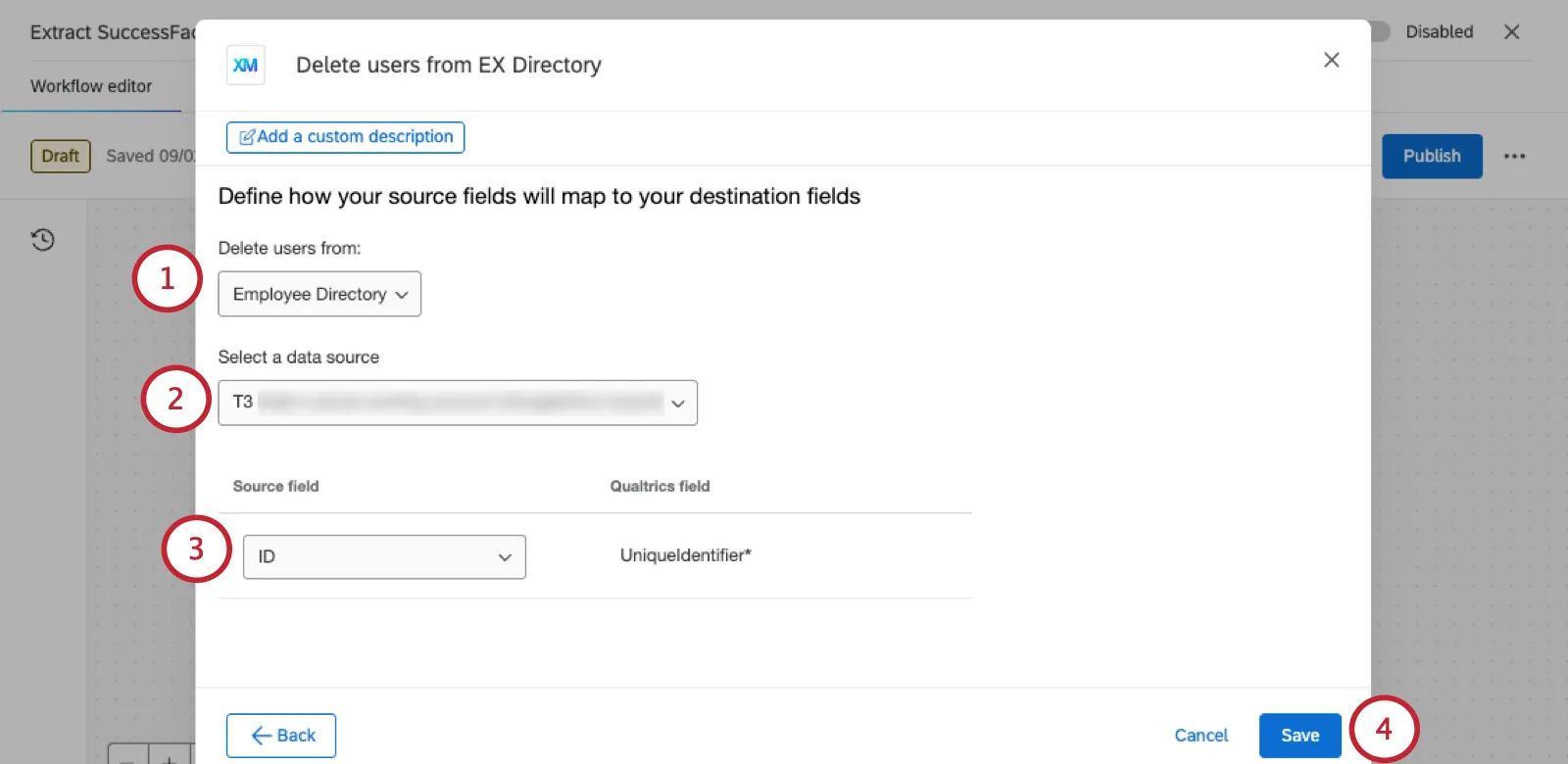
Qtip: When importing directly into a Lifecycle project, these participants ignore any participant import automation criteria.
Select the data extraction task you set up earlier.
Select the field that maps back to the employee unique identifier.
Click Save.
Read the warning.
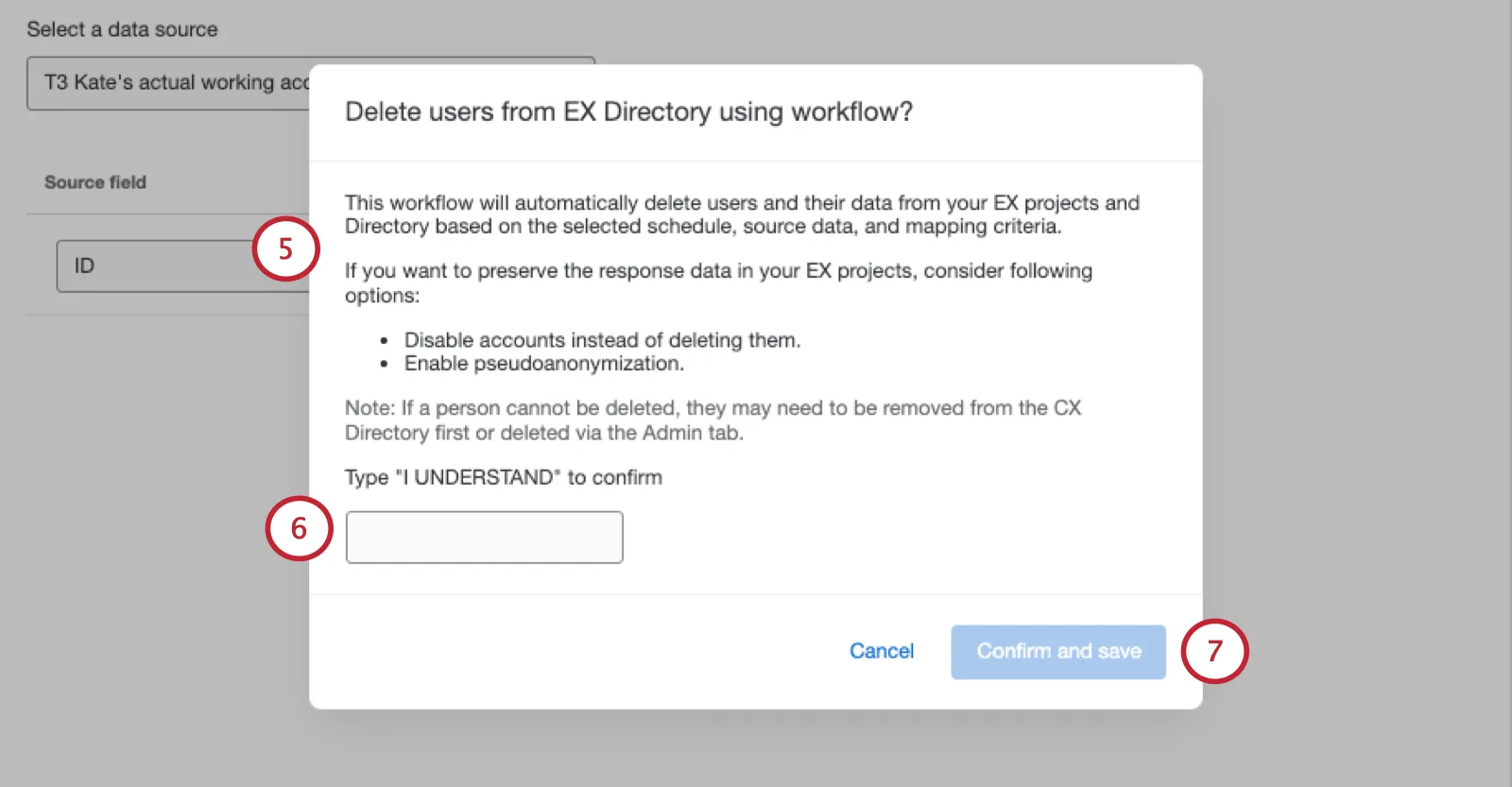
Type “I UNDERSTAND.”
Click Confirm and save.
FAQs
Do I have access to all extensions available through the Workflows templates?
Do I have access to all extensions available through the Workflows templates?
Is there a link to all Workflows events and tasks?
Is there a link to all Workflows events and tasks?
What are Workflows templates?
What are Workflows templates?
What are workflows? / Where are actions?
What are workflows? / Where are actions?
There are no changes to workflow functionality as part of this update.
Are changes to members of my employee directory reflected in my project’s participants?
Are changes to members of my employee directory reflected in my project’s participants?
If you update someone’s unique identifier, first name, last name, or login information, this information will always be reflected in any projects that person is a participant in.
That's great! Thank you for your feedback!
Thank you for your feedback!